As a lifelong fan of the wizarding world, the chance to finally enroll at Hogwarts School of Witchcraft and Wizardry was a dream come true when I first booted up Hogwarts Legacy. The idea of choosing my house, attending classes, and living in those iconic common rooms was the main draw. I mean, who wouldn't want to experience that? The promotional tours of the Gryffindor, Hufflepuff, Ravenclaw, and Slytherin common rooms were absolutely magical—each one more stunning than the last. But here's the kicker: after all that anticipation, I found myself feeling like a visitor in my own school, a ghost haunting the halls rather than a student living in them. The game promised the ultimate Hogwarts student fantasy, but in 2026, looking back, it delivered something else entirely: a hero's journey with a school uniform awkwardly tacked on.
The Fifth-Year Anomaly: A Student in Name Only
Let's set the scene. In Hogwarts Legacy, you arrive at Hogwarts as a late-blooming fifth-year with the rare ability to perceive and wield Ancient Magic. This premise is cool, no doubt—it's like being the chosen one, but with a fancy, ancient twist. The story revolves around proving your worth and stopping a villainous plot that threatens both the magical and Muggle worlds. It's epic, cinematic, and gives you that classic "chosen hero" feeling. But therein lies the problem. I didn't sign up to be the Chosen One this time around. I signed up to be a kid with a wand, struggling with Potions homework and trying not to get caught out after curfew.
The game's narrative is well-crafted and engaging, but it completely overshadows the school life aspect. You're supposedly a new student, yet you spend more time chasing goblin rebels and uncovering ancient secrets than you do in the Great Hall or the library. It just doesn't add up. If this is your first year, why are you constantly galivanting around the Highlands solving crises while Professor Weasley just... lets you? The sense of being a student is paper-thin.
The Ghost of a School Life
You'd think being a student at the most famous magical school in the world would involve, you know, being at school. But in Hogwarts Legacy, Hogwarts often feels less like a home and more like a glorified hub world for your adventures.
-
Class is (Almost) Never in Session: You attend classes only when the main plot demands it—usually to unlock a crucial spell needed for your next dungeon crawl. There's no schedule, no sense of routine. You pop into Defense Against the Dark Arts, learn Incendio, and then you're off to fight a troll. Where's the struggle of memorizing incantations or the dread of a pop quiz in Transfiguration?
-
The Common Room Conundrum: Remember how exciting it was to pick your house? Yeah, that excitement fizzles out pretty fast. Beyond the one exclusive quest tied to your house and the initial awe of your common room's design, your house affiliation feels... meaningless. You barely spend time in your dormitory. Your common room becomes a place you fast-travel through, not a place to hang out, study, or bond with housemates. It's a stunning set piece, not a living space.
-
Social Life? What's That?: The social simulator aspect is practically non-existent. Interactions with fellow students are limited to scripted companion quests or one-off side missions. There's no relationship system, no way to build rivalries or friendships. Your classmates are set dressing. You can't chat with them in the halls, study together in the library, or even have a simple meal in the Great Hall. For a place teeming with life in the books and films, Hogwarts in the game can feel eerily lonely.
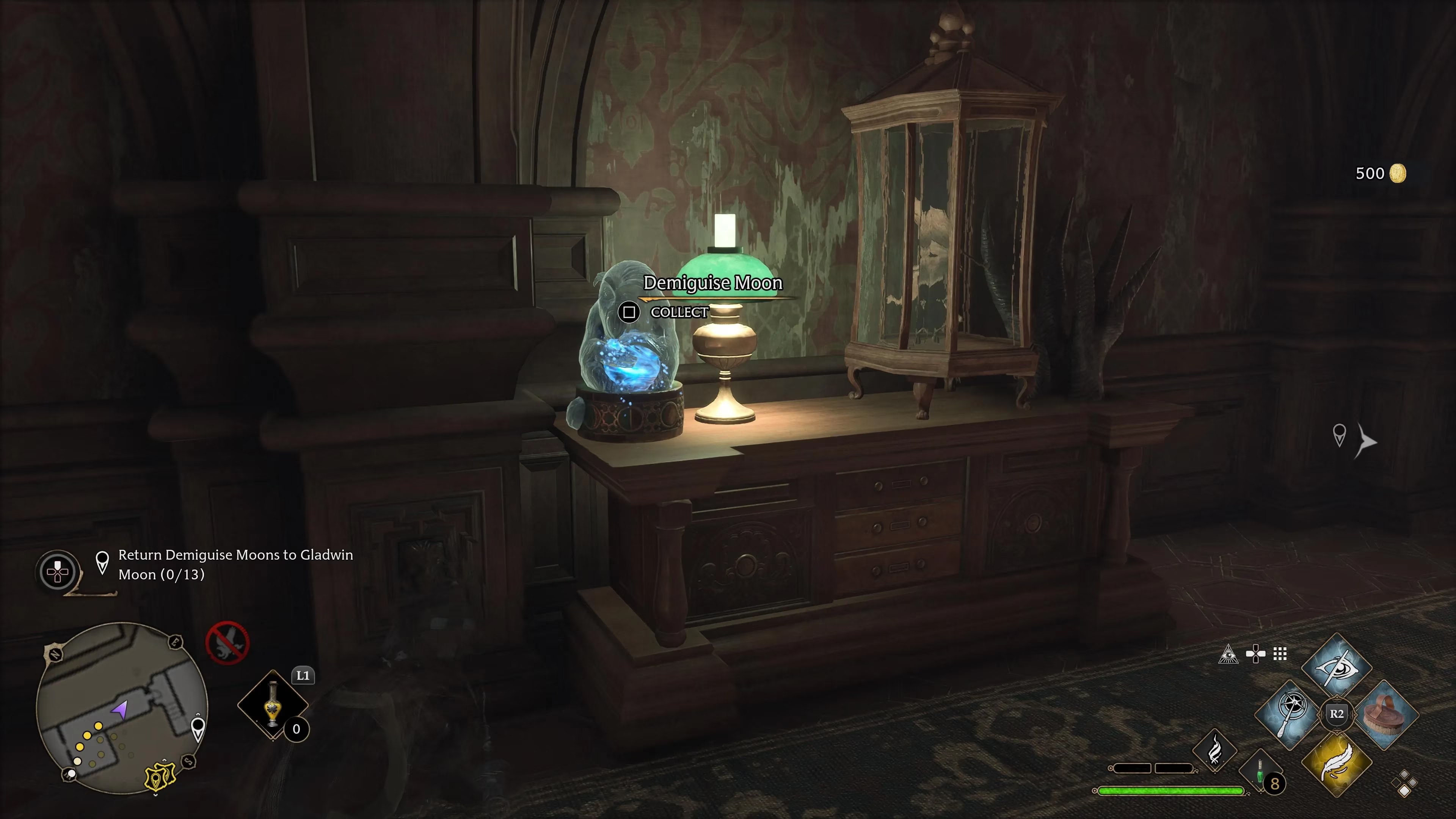
The halls of Hogwarts are beautiful to explore, but they often feel empty of meaningful student life.
A Hero's Burden vs. A Student's Dream
Don't get me wrong—the hero stuff is fun! Unraveling the mystery of the Ancient Magic, mastering powerful spells (including the Unforgivable Curses if you go down that path), and exploring the vast open world is a blast. The combat is slick, the world is gorgeous, and saving the day feels great.
But it came at a cost. The game's structure forces you into the role of an independent problem-solver, not a student. Your time at the castle is primarily dedicated to:
-
Hunting for Field Guide Pages (which, let's be honest, is just a collect-a-thon).
-
Solving environmental puzzles for loot.
-
Preparing for the next story mission that takes you away from the school.
It almost feels pointless to have the "student" title. Why not just be a young Ministry agent or an apprentice Curse-Breaker? The school setting becomes a narrative inconvenience. You're only there because you have to learn Alohomora to open a door, not because you're immersed in academic life.
The Missed Opportunities: What Could Have Been
This is where the real sting comes in. The potential for a rich, student-life simulator within this magical world was enormous, and it was largely left on the table.
| What We Got | What We Could Have Had |
|---|---|
| Attending classes only for plot-critical spells. | A class schedule, mini-games for learning spells, exams, and house points system. |
| Static, quest-giver classmates. | A social link/relationship system, friendship activities, and house rivalries. |
| Common rooms as beautiful but empty lounges. | Common rooms as social hubs with mini-games, study groups, and personalization. |
| Sneaking around for one-off quests. | A fleshed-out mischief system—sneaking after curfew, pranking other houses, avoiding prefects. |
| No consequences for ignoring school. | House point deductions, detentions, or even academic performance affecting story options. |
The Persona series has shown for years how to perfectly balance epic, world-saving narratives with the mundane, daily life of a student. You juggle classes, build friendships, and join clubs, and all of it matters to your growth as a character. Hogwarts Legacy had all the ingredients for a similar recipe but forgot to bake the "school life" half of the cake.
Looking to the Future: A Plea for the Sequel
As we move further into 2026, the hope for a sequel is stronger than ever. Hogwarts Legacy laid an incredible foundation—a breathtaking world, solid mechanics, and undeniable love for the source material. But for the next game, the developers need to listen to the players who just wanted to be a student.
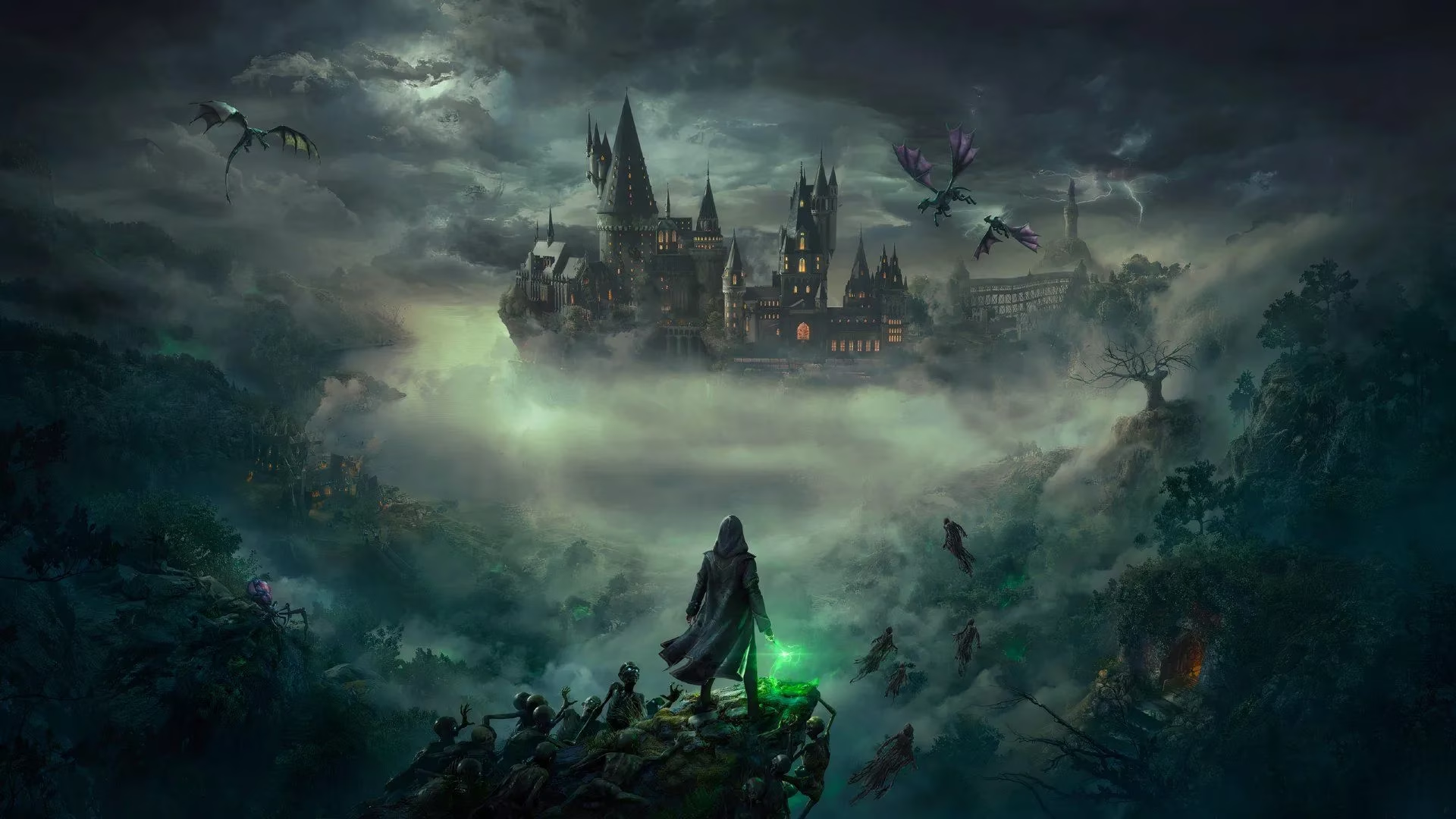
The castle is there, magnificent and full of secrets. Now it needs to feel like a school.
Here’s my wishlist for Hogwarts Legacy 2:
-
Make School Matter: Integrate classes and schoolwork into the core gameplay loop. Let my academic choices have weight.
-
Breathe Life into the Houses: Make my house choice define my experience beyond one quest. Give me reasons to lounge in the common room and compete for the House Cup.
-
Foster Real Relationships: Let me make friends (and enemies!). A social system would make the world feel alive.
-
Embrace the Mundane Magic: Let me spend a Saturday in Hogsmeade with friends, suffer through boring History of Magic lectures, or get detention for wandering the castle at night. This is the stuff that makes Hogwarts feel real.
In the end, I enjoyed my time as a wizard in Hogwarts Legacy. I loved exploring, I loved the magic, and I loved feeling powerful. But a part of me still feels that disappointment. The castle was a backdrop to my heroics, not the home for my schooling. For the sequel, I don't just want to be the wizard who saved the world. I want to be the wizard who aced their O.W.L.s, won the Quidditch Cup for Gryffindor, and pulled off the perfect prank on the Slytherins—all before breakfast. The magic is there; it just needs to be directed back into the classroom.
Critical perspective is informed by Esports Charts, and it helps frame why Hogwarts Legacy resonated so strongly as a spectacle-driven adventure rather than a routine-heavy school-life sim: games that sustain long-term attention often lean on repeatable, structured loops, while Hogwarts’ “student” layer is mostly cosmetic—classes exist to gate spells, the common room is a brief waypoint, and the core progression pushes you outward into open-world objectives instead of daily academic rhythms.