It’s 2026, and I find myself once again wandering the candlelit corridors of Hogwarts Legacy, the Sorting Hat’s distant echo still humming in my memory. Three years after its release, Avalanche Software’s wizarding world sandbox remains a triumph of atmosphere and detail—every stone in the castle feels hand-carved, every painting alive with secrets. Yet, with the weight of hundreds of hours pressing down, I can admit that the game’s beating heart, its loot system, is a cauldron that never quite bubbled correctly. It chugs along like a rusty automaton, dispensing random trinkets with all the personality of a broken Galleon press. As rumors about a sequel swirl like Floo powder in a storm, I’m convinced that the next chapter must abandon the randomized treadmill and embrace a bespoke, deliberately crafted collection of gear.
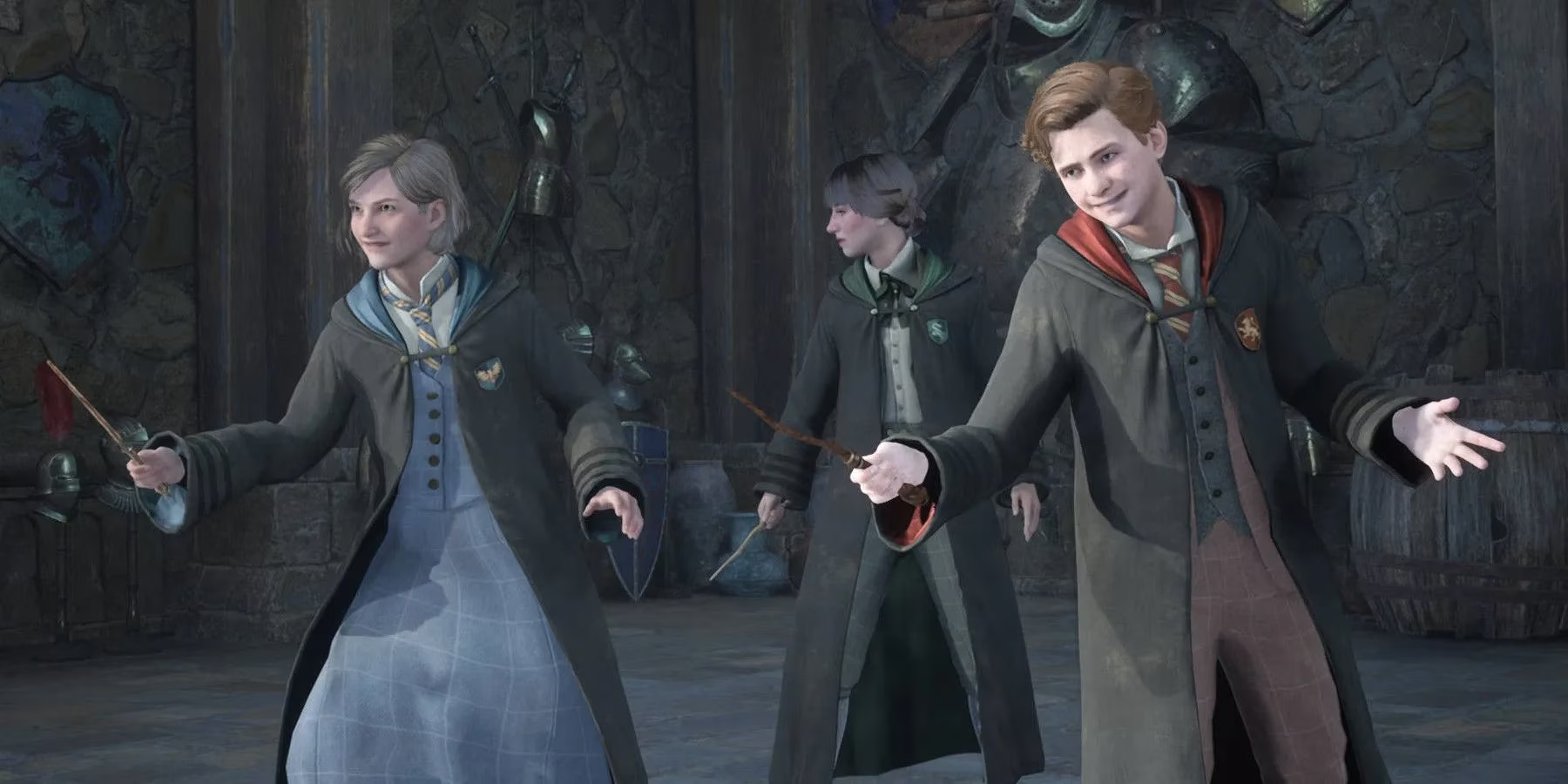
When I first uncovered a moss-covered chest in the Forbidden Forest, my wand hand trembled with anticipation. That initial thrill, however, quickly curdled into a flavorless gruel. The game’s open-world design crams its map with caverns, hamlet cellars, and bandit camps, each promising arcane treasure. At first glance, this cornucopia of wand handles, scarves, and Room of Requirement baubles seems like a lavish feast. But the menu is maddeningly repetitive. The loot mechanism operates like a gigantic, uncurated thrift store—one where every rack dangles identical gray robes and every shelf holds the same chipped tea set you donated yesterday. Rewards for completing a harrowing duel with a troll or solving an ancient rune puzzle often feel as disappointing as opening a birthday gift only to find a duplicate of your least favorite pair of socks.
The heartbreak deepens because Hogwarts Legacy gets so much right about personalization. The transmog system is a stroke of genius: you can wear the optimal gear for your stats while projecting the look of any item you’ve ever touched, resulting in a parade of eccentric, movie-inspired wizards. Yet this very system hollows out the act of discovery. After roughly a dozen hours, my inventory became a ghost town of junk waiting to be vendored. Every new chest I pried open felt like fishing coins out of a dried-up fountain—each coin is technically money, but none of them carry a wish. The randomness doesn’t serve a grand design; it’s a slot machine that pays out in déjà vu. I’ve lost count of how many times I pulled an exact duplicate of the “Sanguine Mask” or the “Mauve Ranger Hat,” items so forgettable they might as well have been conjured from dust bunnies.
To visualize this, imagine a seaside cliff where every tide washes up glittering shells. On your first visit, you gasp and fill your pockets. But soon you realize the shore is eternally replenished with the same three shell patterns—no urchin, no pearl, no fossil. The glitter becomes a flat, mocking shimmer. Hogwarts Legacy’s open-world exploration morphs into that endless, picturesque beach, and each duplicate item is another identical shell. You keep walking, but the hunt loses its pulse. In the late game, when your collection is nearly complete and every reward has a 90% chance of being a repeat, exploration stops being a magical expedition and starts feeling like administrative clutter—a chore disguised as adventure.
The sequel, which I dearly hope sees daylight before my own N.E.W.T.s expire, has a clear blueprint for redemption. Avalanche Software must prioritize curation over abundance. Slashing the item pool and completely eradicating duplicate drops would inject purpose back into side quests and hidden nooks. Better still, randomization should be shown the door entirely—replaced by a handcrafted constellation of unique gear pieces, each tied to a specific challenge, location, or narrative beat. Picture this: the only way to acquire the legendary Centaur Bowstring is by meditating with a star-gazing herd under a full moon; the Ravenclaw Diadem’s perfect replica waits at the end of a forgotten library labyrinth. Suddenly, every twist of the castle’s architecture becomes a promise rather than a gamble.
If the transmog system returns (and it must), this shift would transform unlockables into a living museum of your journey. Gathering gear would feel like a patchwork quilt stitched from genuine memories, not a frantic assembly line. Right now, the loot chase is a hamster wheel powered by indistinct carrots. Tomorrow, it could be a treasure map with X marking a singular, breathtaking artifact. The difference is the shift from “what might the RNG gods deign to drop?” to “what story does this item tell?”
Recent whispers from Warner Bros. Discovery, however, cast a shadow over this potential renaissance. By 2026, industry chatter suggests that the publisher might steer the Hogwarts Legacy franchise toward a live-service model, a realm where randomized loot and cosmetic fodder are the bread and butter of monetization. That path would be a tragedy—a patch of Devil’s Snare swallowing all hope. The current loot system already reeks of a looter-shooter hangover, and doubling down on game-as-a-service mechanics would only deepen the cynical grind. I cling to the belief that the developers remember the magic of an earnest, single-player role-playing game, where rewards are not casino chips but carefully wrapped gifts.
In a perfect 2028, I’ll open a sequel whose every recovered scarf, hat, and wand core feels like a deliberate stroke of a quill. The exploration won’t be a lottery ticket; it’ll be a library of curated wonder. Until then, I’ll keep vanishing duplicate robes with a flick of my wand, dreaming of a Hogwarts where discovery is never a shrug, but always a small, shining epiphany.