Deep within the perpetual twilight of the Forbidden Forest, where ancient trees whisper secrets older than Hogwarts itself, a shimmering trail of pale wings beckons. It is not the scuttle of many-legged horrors that calls the adventurer here, but a delicate dance of butterflies—a quiet invitation that only those steeped in wizarding lore can truly hear. The quest, unassuming at first glance, unravels as one of the most tender in-jokes ever woven into a video game, a love letter folded neatly into the margins of a brand-new story. It is a path that could have changed everything, and for those who follow, it offers not just treasure, but a gentle, knowing smile shared across decades.
In the bustling warmth of The Three Broomsticks, Clementine Willardsey nurses her butterbeer and a small, lingering regret. She speaks of butterflies gathering at the edge of that dark wood, their wings catching the last light, yet she could never muster the courage to trace their flight. A player, serving as the bridge between her curiosity and the unknown, takes up this Relationship Quest and steps into the wild. The task is deceptively simple: find the fluttering guides, walk where they lead, and uncover a small cache hidden among moss and root. The forest, usually a place of lurking fangs and wary glances, softens under the spell of the moment. Sunbeams slice through the canopy like threads of liquid gold, and for a heartbeat, the world forgets its shadows.
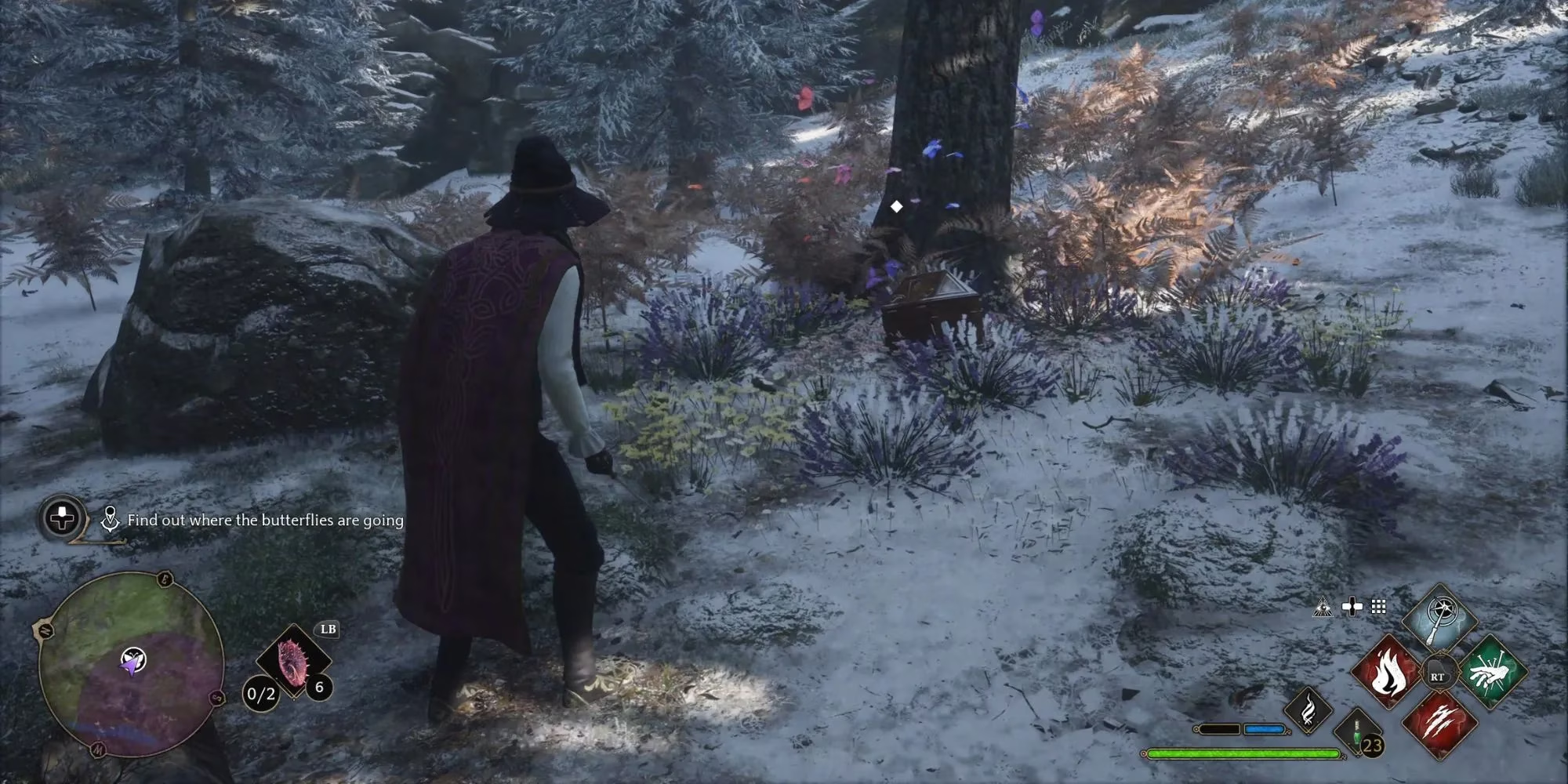
That simple act—following butterflies instead of fleeing from spiders—rips open a portal to the autumn of 1992, when Hermione Granger lay petrified in the hospital wing and two second-year boys faced a terror that eight legs couldn’t capture. Ron Weasley, ever the reluctant hero, stood at the edge of the same forest and uttered the line that still echoes through fan forums and common-room giggles: “Why spiders? Why couldn’t it be ‘follow the butterflies’?” He said it with a voice cracking under the weight of arachnophobia, a plea to a universe that had never been kind to his nerves. The memory is vivid: Hagrid’s hut, the Invisibility Cloak heavy with the breath of a headmaster-to-be, and a half-giant’s parting riddle that sent them not toward gentle beauty but into the nightmare realm of Aragog and a thousand skittering children.
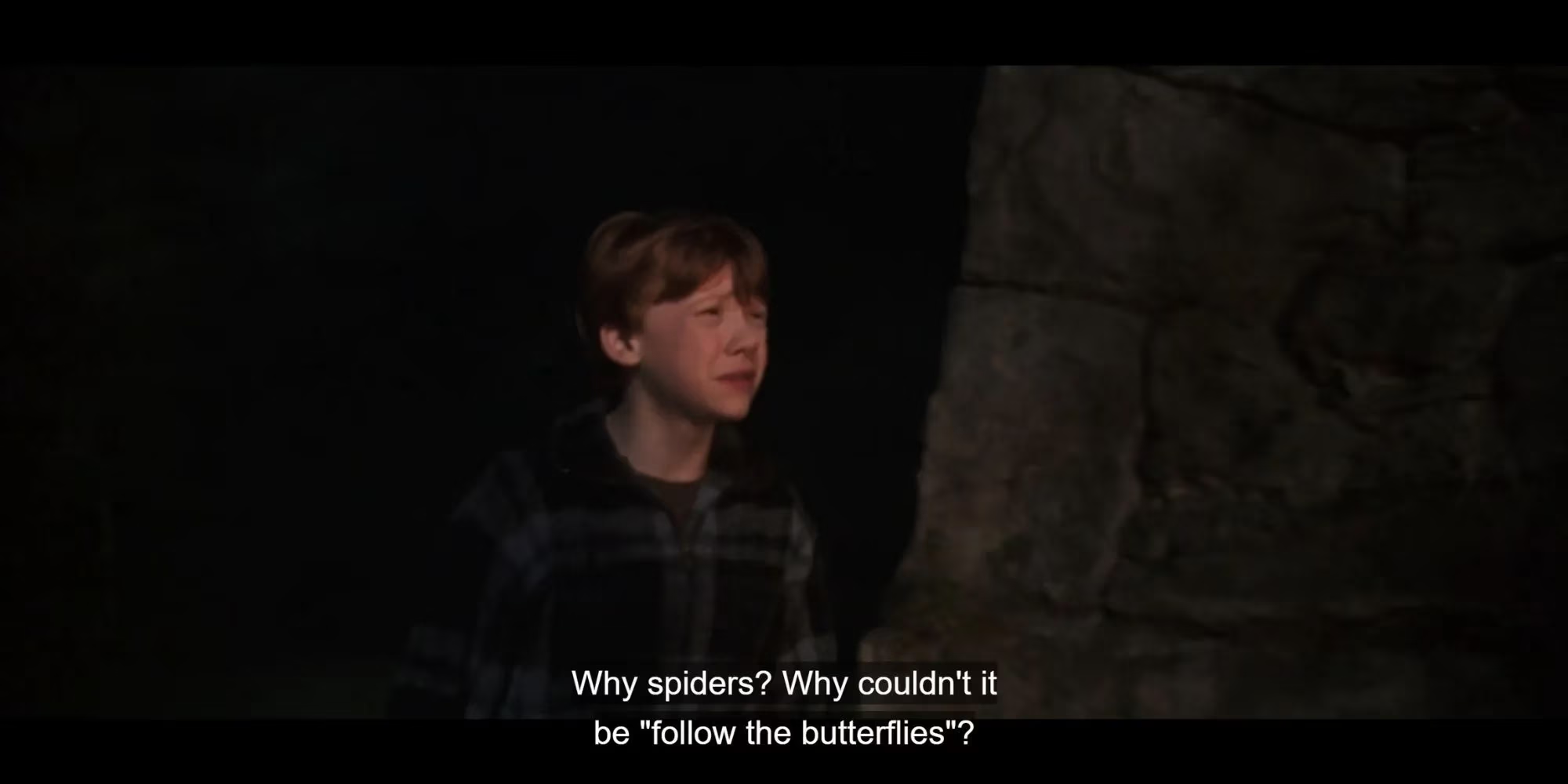
What the developers of Hogwarts Legacy have done, with an almost reverent cheekiness, is to gift the fans that parallel world. Here, decades before the Boy Who Lived ever set foot in Hogwarts, an unnamed student actually gets to live out Ron’s lament. The quest doesn’t mock his fear; it honors it by showing a softer reality, one where curiosity yields a quiet reward instead of a frantic escape on a flying car. The journey through the Forbidden Forest in this side mission is a painterly stroll, with only a few skirmishes that feel more like fleeting nightmares than true threats. At the end, a chest glimmers—not with the Sword of Gryffindor, but with something modest. Yet the real treasure is the act itself, the gentle subversion of a famous terror. It’s as if the game whispers, Yes, you could have just followed the butterflies. And look, it would have been lovely.
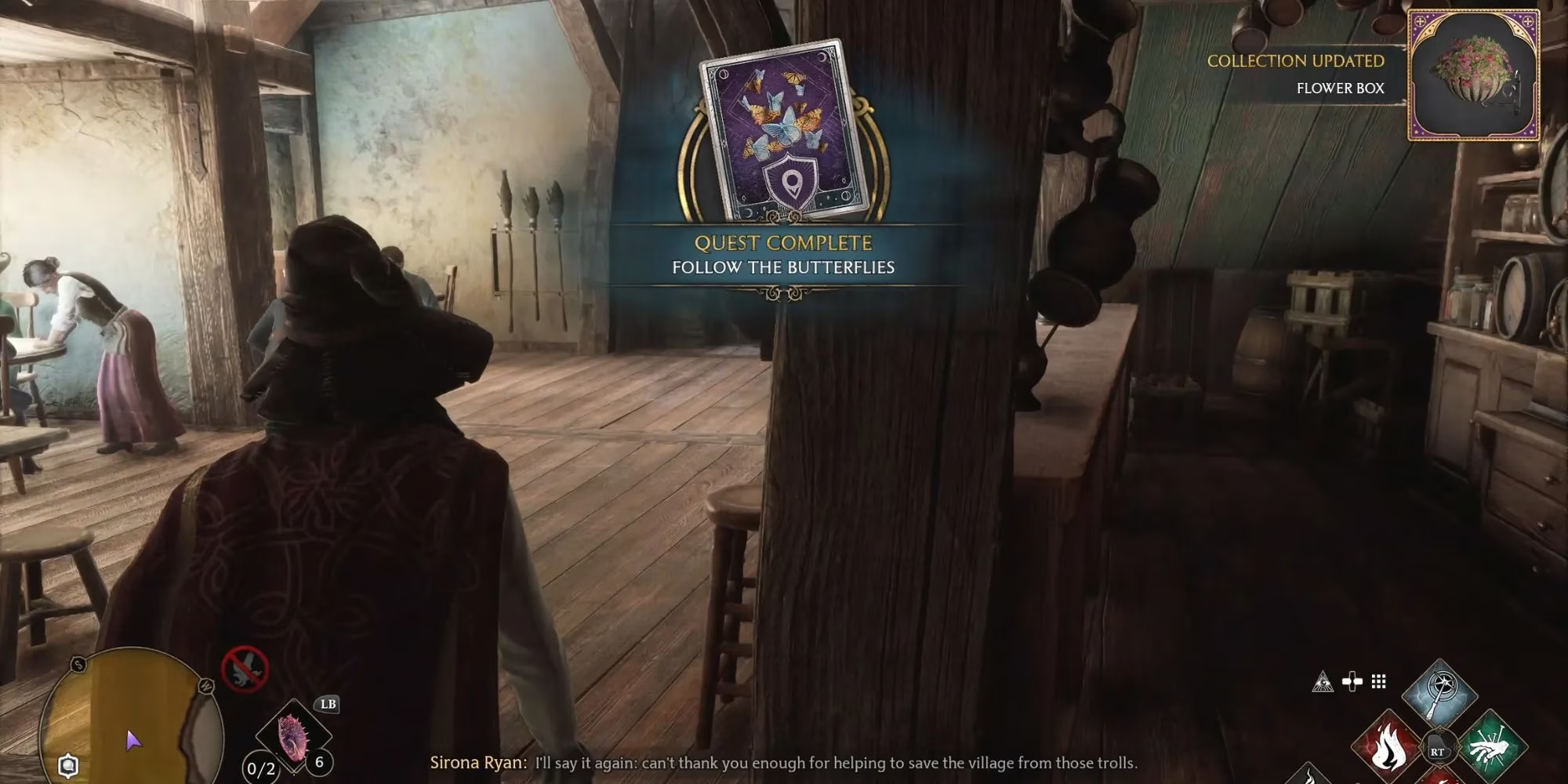
But the joke does not end at the quest’s conclusion. The Forbidden Forest, so often a crucible of fear, has scattered more of these winged guides among the ancient roots. Chasing them rewards the player with Conjuration recipes—small magical crafts that line the shelves of the Room of Requirement. There is no grand fanfare, no legendary loot, just a quiet pat on the back and a nostalgic warmth that lingers longer than any epic gear score. It is the kind of detail that makes the Highlands feel genuinely inhabited, not by monsters alone, but by the memories of those who grew up reading by torchlight under a blanket.
By 2026, the world of Hogwarts Legacy has matured like a fine pumpkin juice. An ever-dedicated modding community has sprouted joyfully around the game, and for those who still feel a shudder at the scuttle of legs, the official Arachnophobia Mode removes the terror, replacing the acromantulas with comically round, harmless figures. The mod Burger Spiders by z3song, a fan favourite that turns skittering foes into stacks of patties and buns, has only grown in popularity, proving that laughter truly is a banishment spell for fear. These flourishes allow every student to explore the Forbidden Forest without the panic, leaning fully into the butterfly-led peace that Ron never got.
The quest is but one thread in a tapestry of astonishing depth. Side missions like Poached Egg or the sweeping flight tests of Imelda Reyes are not filler—they are the heartbeat of the game. They teach the rhythm of the world: the floo powder flashes, the soft crunch of leaves under dragon-hide boots, the way the light bends around a newly conjured hat.
In a game where main quests thunder with goblin rebellions and ancient magic, these small detours are what truly root the player in the soil of the Scottish Highlands. They are the difference between visiting a museum and living inside a painting.
The Follow the Butterflies quest, in particular, acts as a quiet thesis on consequence. It invites the player to imagine a Harry Potter who never met Aragog, a Ron whose stomach never dropped at the sight of a spiderweb. That’s the heart of the Easter egg: not just a wink at a famous line, but a gentle reweaving of fate. The Forbidden Forest becomes a place where even a phobia can be held in suspension, if only for the length of a butterfly’s flight.
To wander the castle halls in 2026, long after the launch hype has settled, is to appreciate these brushstrokes all the more. The game is no longer just a spectacle of spell-casting; it is a homecoming. And in a quiet corner of Hogsmeade, a woman stares at the tree line, still wondering what magic lies beyond. For every player who takes her hand and follows the butterflies, there’s a moment of perfect, golden stillness—a punchline that took over two decades to land, and a fear finally, beautifully, overwritten by light.