As we look ahead to 2026, the monumental success of Hogwarts Legacy continues to cast a long shadow. Selling a staggering 22 million units, it proved that the magic of the Wizarding World could translate into an immersive gaming experience, finally letting fans live out their fantasy of being sorted and finding their place within the hallowed halls. For the most part, the game was a home run, a true testament to what can be achieved when ambition meets a beloved IP. However, not all was perfect in this magical world. Among the four iconic houses, a consensus emerged from the player base: Ravenclaw, the house of wit and wisdom, kinda got the short end of the stick. Its dedicated companion character, Amit Thakkar, felt like an afterthought compared to the rich, engaging narratives offered to Gryffindor, Hufflepuff, and Slytherin. This perceived imbalance presents a golden opportunity for the sequel. Hogwarts Legacy 2 has the chance to conjure a truly stellar side character for Ravenclaw, correcting the course and giving the blue-and-bronze house the deep, compelling story it deserves.
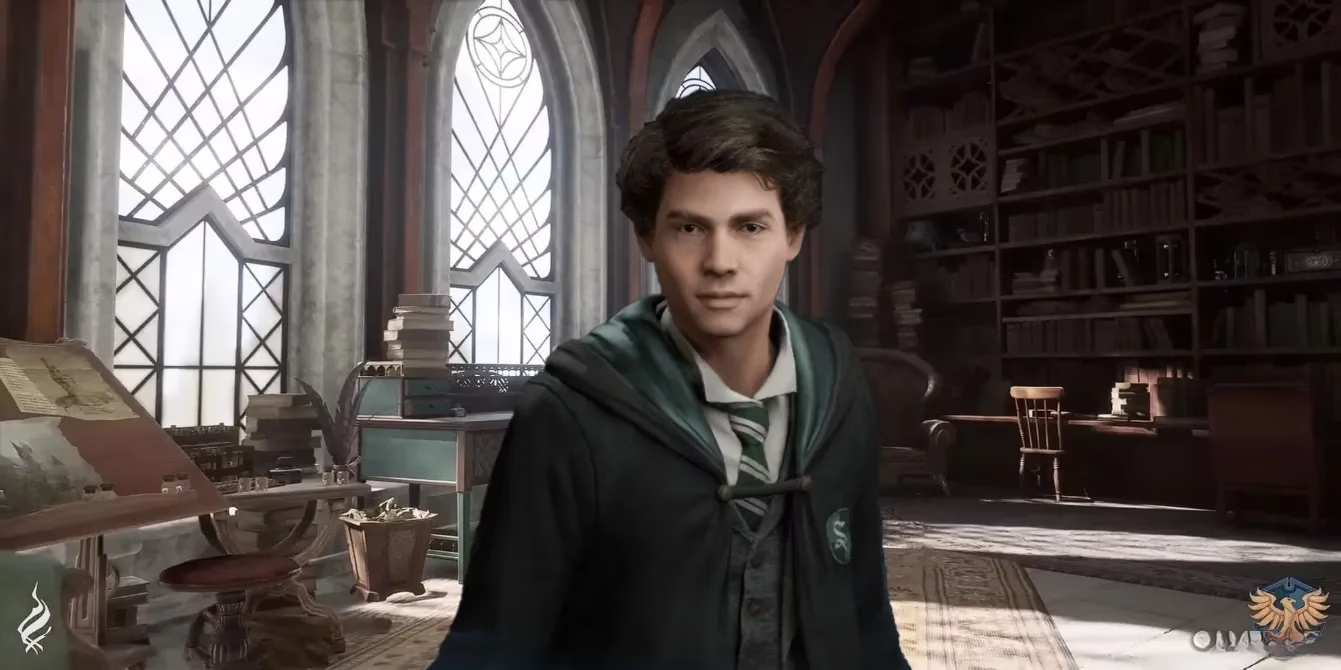
The Overlooked House: Ravenclaw's Untapped Potential
Let's be real, in the grand hierarchy of Harry Potter houses, Ravenclaw often plays second fiddle. Gryffindor gets the glory, Slytherin gets the intrigue (and the memes), and Hufflepuff gets the wholesome rep. Ravenclaw? It's the house of the brainiacs, home to eccentrics like Luna Lovegood and, well, let's not forget Gilderoy Lockhart. Its core values—wit, learning, wisdom, and creativity—are intellectually fascinating but can be harder to dramatize than bravery or ambition. This led to a curious situation in the first game: while many players were initially drawn to Ravenclaw's scholarly reputation, the in-game experience didn't quite live up to the hype.
Here’s the breakdown of how the house companions stacked up in the original Hogwarts Legacy:
| House | Companion | Story Quality | Key Traits Explored |
|---|---|---|---|
| Slytherin | Sebastian Sallow | ⭐⭐⭐⭐⭐ (Top Tier) | Ambition, Power, Moral Gray Areas, Family |
| Hufflepuff | Poppy Sweeting | ⭐⭐⭐⭐ (Very Good) | Loyalty, Kindness, Magical Creature Advocacy |
| Gryffindor | Natsai Onai | ⭐⭐⭐⭐ (Very Good) | Courage, Justice, Confronting the Past |
| Ravenclaw | Amit Thakkar | ⭐⭐ (Lacking) | Academic Interest, Astronomy |
The table doesn't lie. While other companions embarked on exclusive quests with the player, forming dynamic partnerships, Amit's role was largely passive. He didn't tag along for adventures; he mostly provided information. Compared to Sebastian's dark, family-driven descent into the Dark Arts—a storyline many considered the game's narrative pinnacle—Ravenclaw's offering felt superficial. It was a missed opportunity that left a significant portion of the player base feeling shortchanged.
Building the Perfect Ravenclaw Companion: Learning from the Best
To fix this, Hogwarts Legacy 2 needs to take a page from Sebastian Sallow's book—figuratively, not one of the cursed ones. Sebastian worked because his motivations were deeply personal, complex, and tragically relatable. He wasn't just "the Slytherin guy"; he was a brother desperate to save his sister, and his house traits (ambition, cunning) were the vehicle for that desperation, leading him down a morally ambiguous path. That's the secret sauce.
A Ravenclaw companion needs a similarly powerful, intellectually-driven motivation. The pursuit of knowledge is a great start, but it needs an edge. What if that pursuit becomes an obsession? Imagine a companion whose story arc revolves around a single, seemingly unanswerable question—a magical paradox, a lost piece of ancient runic lore, or the true nature of a forgotten form of magic. Their "wit" could manifest as a brilliant but ruthless logical mind, and their "wisdom" could be tested as they grapple with the ethical costs of their quest.
Potential narrative hooks for a Ravenclaw companion could include:
-
The Forbidden Thesis: A student attempting to reconstruct a banned branch of magic, believing its suppression was a historical mistake.
-
The Cursed Conundrum: Obsessed with solving a magical plague or curse affecting magical creatures, employing dangerously experimental methods.
-
The Architect's Secret: Uncovering the hidden, sentient magic woven into Hogwarts' very stones by Rowena Ravenclaw herself, a secret that could destabilize the castle.
This approach would adhere to the Ravenclaw ethos—intelligence, curiosity, creativity—while giving it the dramatic weight and personal stakes that made Sebastian's story so memorable. It would move beyond the stereotype of the bookish nerd and into the realm of the passionate, possibly flawed, genius.
More Than Making Amends: A Richer Wizarding World
Giving Ravenclaw a top-tier companion isn't just about making it up to the fans who chose blue and bronze. It's about enriching the entire game world. A strong Ravenclaw narrative would provide a perfect thematic counterpoint to the first game's highlights. Where Sebastian's story was about emotional desperation and power, a Ravenclaw story could be about intellectual desperation and truth. This variety is what keeps an open-world game feeling fresh and expansive.
Furthermore, a well-written Ravenclaw companion could open up entirely new gameplay mechanics. Their quests could involve:
-
Complex puzzle-solving that requires player ingenuity.
-
Research and discovery mechanics in the library or scriptorium.
-
Debates or intellectual duels (a battle of wits, not wands!).
-
Crafting or enchanting based on rediscovered ancient principles.
In 2026, player expectations are higher than ever. A sequel can't just rehash the same formula; it needs to evolve and address the feedback from its predecessor. By investing in a compelling Ravenclaw companion, Hogwarts Legacy 2 would demonstrate a commitment to depth and balance across all four houses. It would transform Ravenclaw from the "overlooked house" into a must-play experience, finally giving players a reason to shout "Wit beyond measure is man's greatest treasure!" with genuine pride and excitement. The blueprint is there; the sequel just needs to have the wisdom to follow it.