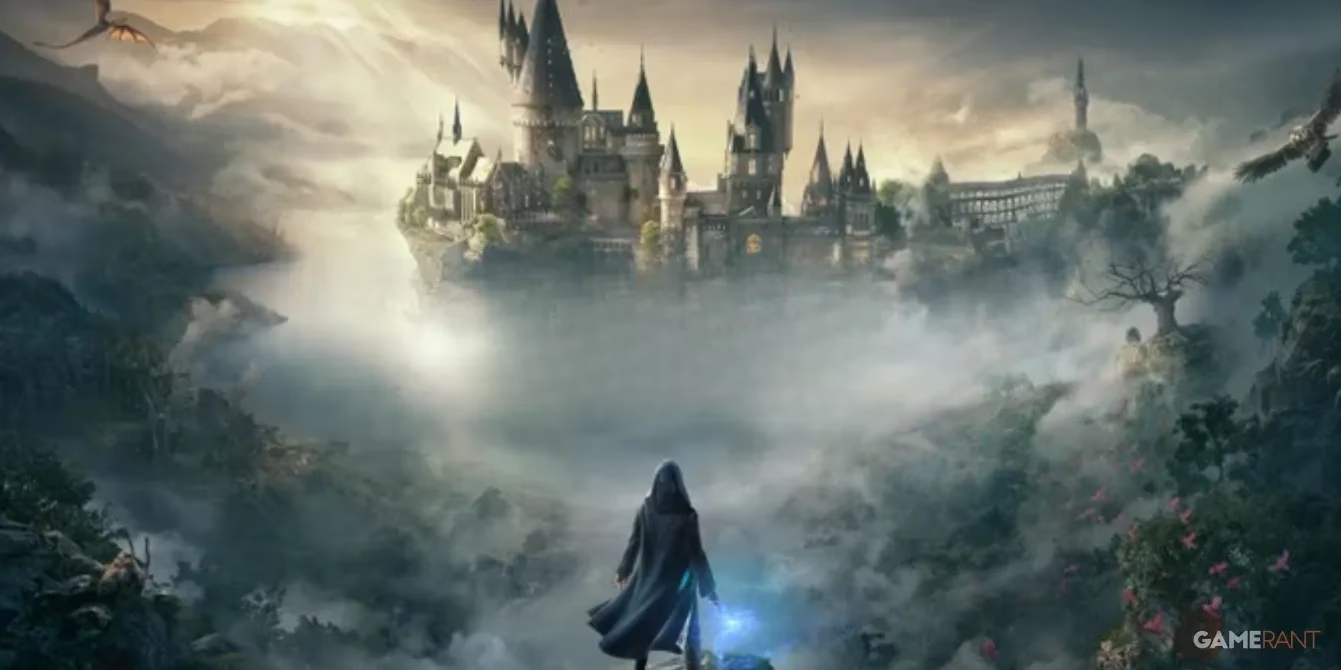
The wizarding world is abuzz once more, and it’s not because of a rogue Cornish Pixie. In a magical revelation that has fans clutching their wands, Warner Bros. has officially confirmed that the spellbinding success of 2023's Hogwarts Legacy is getting a sequel. But here’s the real enchantment: Hogwarts Legacy 2 isn't just brewing in isolation. Warner Bros. Interactive Entertainment president, David Haddad, has waved his corporate wand, declaring that the game's developers are actively working to intertwine its narrative with the upcoming HBO Harry Potter television series. This move aims to create a cohesive, sprawling magical universe, but like a poorly cast Engorgio charm, it risks bloating the experience for fans who might prefer their adventures a bit more self-contained.
The Allure and Peril of a Connected Universe ✨
On the surface, this synergistic strategy is as tempting as a fresh box of Bertie Bott's Every Flavour Beans. The potential benefits are substantial:
-
Cross-Pollination of Audiences: Fans of the HBO show might be lured into the interactive world of the game, and vice-versa, effectively doubling the magical demographic.
-
A Richer, Unified Lore: A synchronized storyline could deepen the mythology of the Wizarding World, offering new layers beyond the original books and films.
-
Marketing Synergy: Launching related content across mediums creates a powerful, inescapable hype storm worthy of a Dementor's chill.
However, this ambitious plan comes with its own set of potential jinxes. The primary concern is narrative dependency. Will players need to binge the HBO series to understand crucial plot points in Hogwarts Legacy 2? Conversely, will television viewers feel lost if they haven't unlocked the "True Ending" in the first game? This approach has precedent in other franchises, not always to universal acclaim. Marvel's cinematic and televised universe, for instance, has faced criticism for becoming an overwhelming homework assignment rather than pure entertainment. For a franchise as vast as Harry Potter, forcing fans to juggle a game and a show to follow one coherent tale could feel less like an invitation and more like a mandatory N.E.W.T. level exam.
The Great Canon Conundrum: Which Ending is "Real"? 🤔
Speaking of endings, the first Hogwarts Legacy presented players with a magical trifecta of conclusions: the virtuous Good Ending, the morally dubious Evil Ending, and the secretive True Ending. This branching path now poses a fascinating dilemma for the creators.
| Hogwarts Legacy Ending | Description | Canon Implications |
|---|---|---|
| Good Ending | The protagonist contains the ancient magic, choosing a path of restraint and protection. | A safe, heroic choice for a broader audience. |
| Evil Ending | The protagonist embraces the power for personal gain, becoming a formidable dark wizard. | A risky, dramatic direction that could redefine the lore. |
| True Ending | Unlocked after either Good or Evil, revealing deeper secrets about the repository. | The most lore-rich option, potentially setting up future stories. |
Will the HBO series and Hogwarts Legacy 2 designate one of these outcomes as official canon? Or will the sequel cleverly sidestep the issue entirely by introducing a brand-new protagonist and era, rendering the first game's choices a personal, isolated adventure? The latter seems increasingly plausible and perhaps wiser. A fresh start would keep the game series invigorated and avoid alienating players whose choices didn't align with a dictated "correct" path.
A Leap Through Time: Modern Hogwarts? ⏳
This leads to the most tantalizing speculation of all: the setting. The HBO series is expected to faithfully adapt the original seven books, chronicling the saga of The Boy Who Lived. If Hogwarts Legacy 2 is to run parallel to this without causing temporal paradoxes, it likely won't be another 1800s prequel. Could we be looking at a game set in a more contemporary, even post-Harry Potter era? Imagine navigating Hogwarts in the 2010s or 2020s, where portraits gossip about "The Potter Years," and the curriculum includes modern magical studies. This would:
-
Allow the game to tell a completely new story unshackled from established book events.
-
Create a clear distinction between the show's classic tale and the game's innovative narrative.
-
Provide a perfect in-universe explanation for any crossover elements, as the HBO show's events would be the historical foundation for the game's modern world.
Final Incantations: A Bold, Bewitching Gamble 🎲
The confirmation of Hogwarts Legacy 2 is, by itself, a reason for celebration. The prospect of it being narratively woven with a major television series is a spell of unprecedented ambition. Warner Bros. is attempting to conjure a multimedia leviathan, a unified Wizarding World for the streaming age. The potential for an epic, interconnected experience is immense, promising a depth of world-building that could make even the Room of Requirement jealous.
Yet, the risks are as clear as a crystal ball's warning. The path is fraught with challenges:
-
Fan Fatigue: The demand to engage with multiple expensive, time-consuming mediums.
-
Creative Constraints: The need for game writers and TV showrunners to align their visions, potentially limiting creative freedom.
-
Accessibility: Ensuring each project is enjoyable as a standalone experience while rewarding those who dive into both.
In 2026, as development continues, the magical community watches with bated breath. Will this fusion be a masterstroke, a Felix Felicis-fueled success story? Or will it be a cautionary tale about the perils of over-complicating a beloved universe? Only time, and perhaps a sneak peek into a Pensieve, will tell. One thing is certain: the next chapter for Hogwarts Legacy promises to be as unpredictable and captivating as a game of Wizard's Chess against a grandmaster.