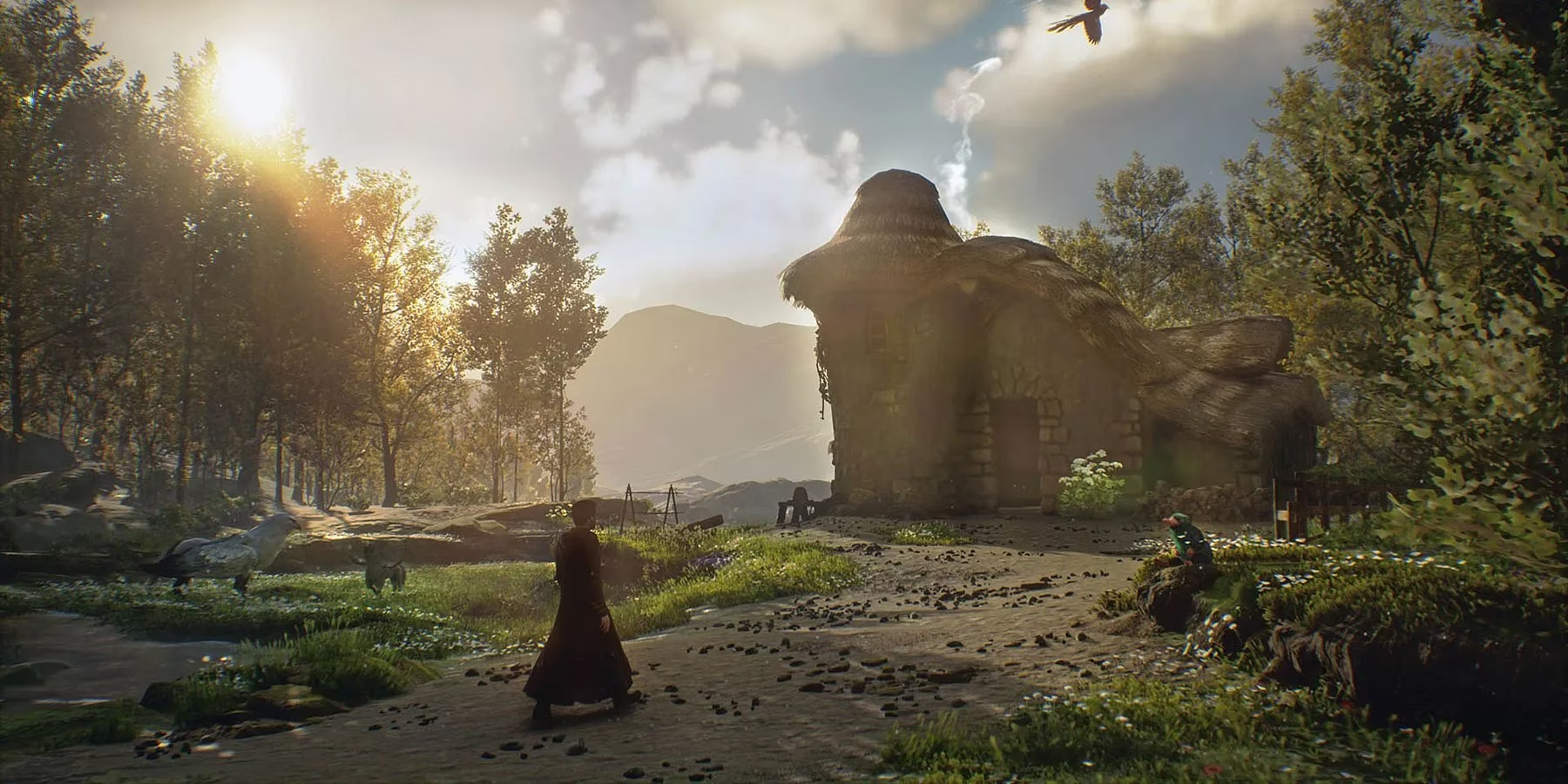
It’s 2026, and the wizarding world is still buzzing — not just with the hum of Nifflers and Hufflepuff common room gossip, but with the near-inevitable whispers of Hogwarts Legacy 2. The first game painted a sprawling, living canvas where broomsticks sliced through crisp Highland air, secrets lurked behind every tapestry, and Merlin Trials dotted the landscape like scattered dragon scales. Those charming little puzzles felt like a cup of butterbeer during a quiet afternoon — warm, fizzy, and full of promise. Then you reached your twentieth trial. Then your fiftieth. And suddenly, that butterbeer had gone flat, leaving behind a sticky, repetitive aftertaste.
Merlin Trials in Hogwarts Legacy were a bold swing that connected beautifully for the first dozen loops but ended up looping players through a deflated soufflé — initially delightful, but losing all air by the third bite. Out of the ninety-five trials hidden across the map, only nine different puzzle types existed. That meant each type accounted for roughly ten repetitions, forcing gamers to replay the same "light the braziers" or "roll the giant orb" challenges over and over like a magically enchanted jigsaw puzzle where every piece is the same shape. The community’s response? A collective sigh louder than a Mandrake’s scream.
Yet, despite the eye-rolls, the Trials shouldn’t vanish into a Pensieve of forgotten game mechanics. They formed a gentle rhythm — a restorative tonic between battling dark wizards and dodging Graphorn charges. Plus, they unlocked something precious: extra gear slots. With each milestone reached, a player’s inventory expanded by four precious slots, turning the grind into a slow, steady drip of inventory freedom. It felt akin to a goldfish remembering a castle — each tiny expansion of capacity might seem trivial, but after hours of repetition, you realized your aqua-world had grown significantly. For completionists, the "Merlin's Beard!" trophy became both a badge of honor and a scar of endurance. In 2026, less than 5% of Steam players have claimed that digital accolade, a quiet testament to the Trials’ burnout factor.
So what does Avalanche Software do next? Bury the trials under a giant pumpkin patch? Surely not. Instead, the studio — presumably deep in sequel enchantments — can polish this magical mirror until it reflects a truly spellbinding experience. The fix is twofold, as simple as a well-cast Lumos.
🔍 Diagnosis: Why Players Ditched the Trials
Before prescribing potions, let’s peek into the cauldron. The two gremlins gnawing at Merlin Trials were:
-
Sheer Volume: 95 trials scattered across an already content-rich world. After completing the main story, side quests, and dozens of other activities, chasing them all felt less like a treasure hunt and more like a census.
-
Crippling Repetitiveness: Only 9 variations – a paltry handful when compared to the vast tapestry of magical possibilities. Players quickly memorised every pattern: Accio the orb, Depulso the rock, Reparo the statue, rinse and repeat.
Imagine a playlist that promised 95 magical orchestral tracks but actually shuffled the same nine tunes on eternal replay. No matter how enchanting Waltz of the Mandrakes sounds at first, by track 43, you're ready to fling your headphones into the Black Lake.
✨ The Sequel’s Spellbook: How to Reshape Merlin Trials
If Hogwarts Legacy 2 wants to keep this feature — and it should — it needs to transfigure it from a chore list into a genuine world wonder. Here’s the recipe, stirred counterclockwise thrice:
1. Embrace True Variety 🌿
Nine puzzle types simply aren’t enough for a world that’s likely to expand. The sequel could explode the palette to twenty-five or thirty unique challenges. Imagine trials that require:
-
Brewing a miniature potion on the spot using ingredients found only in that region.
-
Guiding a flock of Kneazles through a magical maze with Levicorpus.
-
Solving riddle-mirrors that reflect the player’s past choices.
-
Orchestrating elemental chains — ignite a brazier with Incendio, then freeze the steam mid-air to form a bridge.
-
Partnering with a beast (a Thestral, perhaps) to unveil hidden runes.
More variety not only kills boredom but also transforms each trial into a micro-adventure rather than a tick-box. The open-world trend shows that game maps grow with sequels; if the Highlands stretch even farther in 2027, a larger trial count balances naturally if the puzzles feel distinct. The goal is to make players think, "I can’t wait to see what Merlin dreamed up here!" instead of, "Oh look, another glowing moth."
2. Rethink Scattered Placement 🏰
Instead of peppering the map with 95 near-identical shrines, the sequel could group trials into regional themed clusters. For example:
| Region | Merlin Trial Theme | Sample Puzzle |
|---|---|---|
| Forbidden Forest | Nature & Beasts | Lure a Mooncalf to a specific tree using luminescent spores. |
| Hogsmeade Valley | Community & Charm | Help animated statues complete a dance with precise Wingardium Leviosa gestures. |
| Coastal Cavern | Sea & Secrets | Redirect waterfalls to reveal hidden caves, then use Reparo on a shipwreck mural. |
Such clustering tells a micro-story about Merlin’s influence in different parts of the world, rewarding exploration with narrative texture.
3. Reward Progress Beyond Gear Slots 🎁
Gear slots are wonderful — ask any Fashion Legacy player — but after the third expansion, the thrill dims. The sequel could introduce a Merlin’s Wisdom Tree: a dedicated skill line that unlocks cosmetic spells, enchanted mount appearances, or even a fragment of Merlin’s own memory (unlocking backstory). Imagine learning a spell that makes your broom leave a trail of constellations, or a robe that shifts patterns with your moral choices. Each completed tier becomes not just a number but a visible, cherished souvenir of your journey.
4. Dynamic, Not Static 🔮
Why not let trials evolve? Weather, time of day, or even season could alter the puzzle. A winter Merlin Trial near Hogsmeade might require melting ice shapes with Incendio, while the summer version asks you to water magical blooms with Aguamenti. This gentle responsiveness would crush monotony and echo the living world the first game so beautifully built.
📊 The Player Voice: Data Tells a Story
It’s worth noting the achievement stats from the first game. On Steam, fewer than one in twenty witches or wizards snagged "Merlin’s Beard!" This isn't just a number — it’s a mirror reflecting how even dedicated fans hit a wall. However, the very same players who bowed out at fifty trials still recall the joy of their first ten. That spark is the ember Avalanche must nurture. If Hogwarts Legacy 2 can raise the completion rate to, say, 20% or more, it will signal a design triumph.
🌟 Final Incantation
Merlin Trials don't need to be buried — they need to be reborn. Like a Phoenix rising from tedious ashes, the sequel can reshape them into a rich tapestry of magical brain-teasers that players actively hunt down, not grudgingly tolerate. The open-world legacy is already staggering; the second chapter has a chance to prove that quantity and quality can soar hand-in-hand on a Nimbus. By cutting repetition, injecting wonder, and rewarding creativity over mere persistence, Hogwarts Legacy 2 could make every "Well done, young witch!" feel like a genuine badge of enchantment. So here’s hoping that when we finally mount our brooms again in the late 2020s, the trials we find aren’t mere echoes of the past, but vibrant new spells waiting to be cast. ✨🧙♀️
Until then, keep polishing your wand — and maybe practice that Reparo on your patience.