Hey everyone! As a massive Potterhead and someone who sank way too many hours into exploring every corner of Hogwarts in the 1890s, I can't stop thinking about what's next. Hogwarts Legacy wasn't perfect, sure, but man, it captured that magical feeling. Now, in 2026, the buzz for a sequel is real. But here's the thing I keep asking myself: do we really want more of the same Victorian-era magic, or is it time for Avalanche Software to take a real risk? Let's dive into why a jump way, way back in time might just be the spell we need.
🏰 The Case for a Medieval Hogwarts
We've seen the castle in its late-1800s glory, and it was stunning. But have you ever wondered what it looked like when it was first built? I mean, the founders—Godric, Rowena, Helga, and Salazar—laid the first stones in 990 AD. That's the 10th century! Imagine exploring a Hogwarts that's not a sprawling, Gothic masterpiece, but a smaller, rougher, more medieval fortress. Think stone towers without all the later additions, drafty halls lit by torches, and a grounds that's wild and untamed. Wouldn't that be a fresh visual feast?
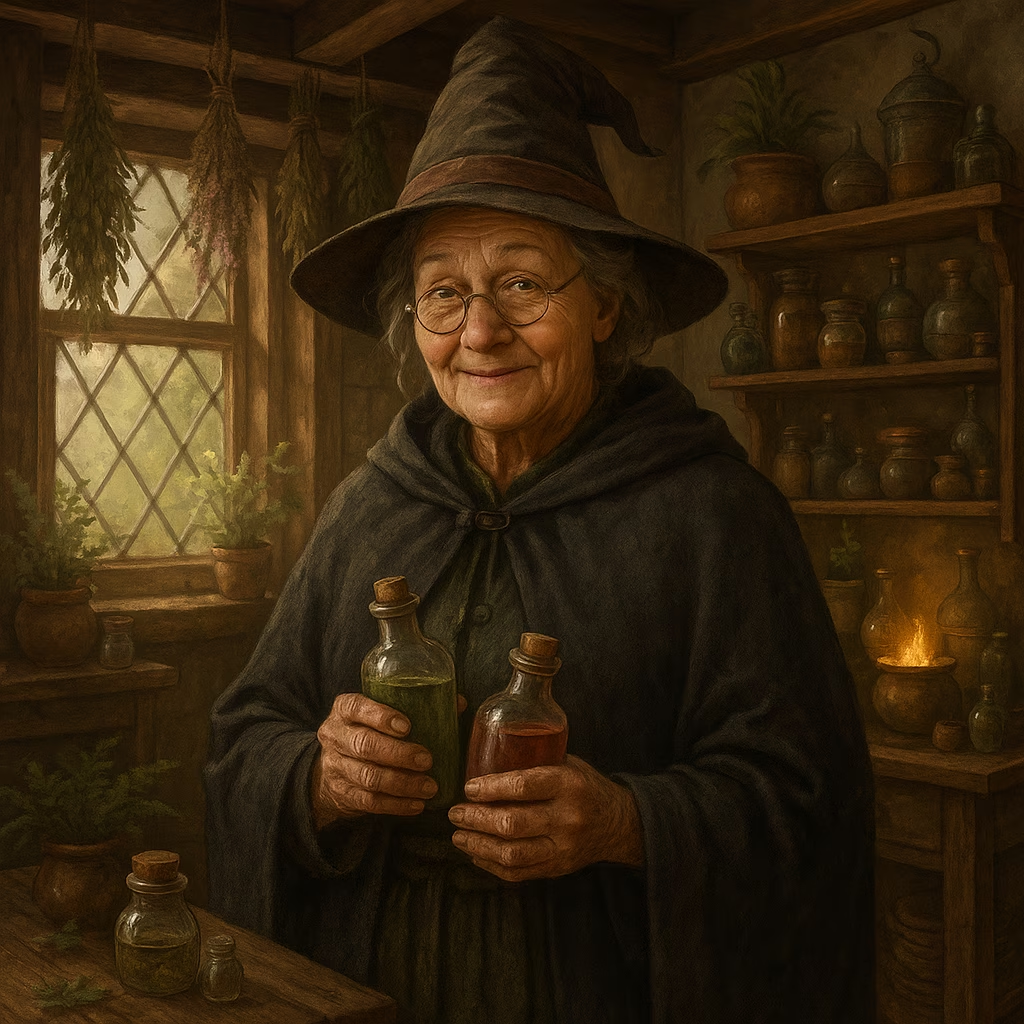
The current Victorian look is iconic, but let's be real—it's been done. A medieval setting wouldn't just be a new coat of paint; it would fundamentally change the atmosphere. It could be darker, grittier, and filled with the raw, uncharted magic of a world still figuring itself out.
⚔️ Darker Themes & Untold Stories
Setting a game in this era isn't just about aesthetics. Think about the historical context: this was a time of witch trials and real persecution in the non-magical world. A story could involve wizards and witches fleeing Europe, seeking refuge at a newly founded Hogwarts. The founders themselves wouldn't be distant legends but active, flawed people wrestling with how to build a safe haven. What conflicts arose between them? How did they decide on the House system? A sequel here could explore the morally gray origins of everything we know.
-
Potential Story Threads:
-
Salazar Slytherin's growing distrust of Muggle-borns and the eventual creation of the Chamber of Secrets.
-
The founders gathering the first magical artifacts that would become legendary (think the Sorting Hat's first song!).
-
Forming alliances with other magical beings like giants or centaurs when the world was more dangerous.
-
This setting practically writes its own compelling, mature narrative. It's a chance to move beyond the \u201cstudent simulator\u201d and into a foundational myth for the wizarding world.
🎮 Gameplay & World-Building Possibilities
Okay, but would it still feel like a Harry Potter game? That's the million-Galleon question. A medieval Hogwarts would mean different rules, different magic, and a different world. And honestly? That's exciting!
-
Magic System: Spells could be more experimental, less standardized. What if we learned magic directly from the founders, each with their own unique style?
-
The Castle: No moving staircases yet? No problem! Navigating a smaller, but more mysterious and trap-ridden original castle could be a puzzle in itself.
-
The Open World: The Highlands around Hogwarts would be truly wild. No Hogsmeade, but perhaps ancient druidic circles, dragon nesting grounds, and the territories of powerful, old magic beings.
Sure, moving away from the cozy, familiar Victorian look is a risk. That aesthetic is Harry Potter for many of us. But isn't the magic of this universe its depth and history? Exploring its roots could make the world feel even larger and more lived-in.
⚖️ The Risk vs. The Reward
Let's not kid ourselves—the safest bet is a sequel set closer to the first game, maybe following our 1890s protagonist's next adventure. But would that generate the same level of hype? After the mixed reactions to the first game's RPG elements and story, playing it safe might feel like a missed opportunity.
A bold leap to the founding era is the kind of ambitious swing that could redefine a franchise. It could attract players who crave a deeper, darker fantasy RPG, while giving die-hard fans the lore-deep dive they've always wanted. The key would be balancing the new with the familiar—the core values of bravery, wisdom, loyalty, and ambition would still be there, just seen through a much older lens.
✨ Final Thoughts
As we look ahead in 2026, the potential for Hogwarts Legacy 2 is immense. Avalanche Software has a chance to not just make another game, but to craft an essential chapter in wizarding history. A medieval prequel could offer:
| Aspect | Potential in a Medieval Sequel |
|---|---|
| Visuals | Unique, gritty, dark fantasy aesthetic. |
| Story | Foundational, morally complex, high-stakes origins. |
| Gameplay | Opportunity for more experimental magic and exploration. |
| Lore | Deep, satisfying answers to long-standing fan questions. |
Would it be a gamble? Absolutely. But sometimes the most powerful magic requires a bit of danger. I, for one, would be first in line to wield a wand in the age of the founders. What about you? Would you explore a darker, older Hogwarts, or do you think the sequel should stick closer to home? Let me know in the comments! 🔮