The whispers of a sequel drift through the enchanted air, a promise hanging like the promise of a new term at Hogwarts. Since its grand debut, Hogwarts Legacy offered a generation of witches and wizards the golden ticket—a chance to roam the hallowed halls, to feel the ancient stones hum with latent magic beneath their feet. Yet, as 2026 dawns and anticipation for the next chapter builds, a curious thought takes root. Perhaps the path to a truly magical RPG isn't forward into an ever-expanding wilderness, but inward, toward a more intimate, focused, and yes, linear experience.

Let's be honest, the open world of the first game was a bit of a mixed bag, wasn't it? For every breathtaking vista of the Scottish Highlands, there was a sense of... well, busywork. The map became a canvas cluttered with markers, leading to Merlin Trials that felt more like a chore than a challenge, and hamlets that blended into one another. It adopted the "Ubisoft formula" of the 2010s—a design philosophy that, frankly, feels as dated as a Nimbus 2000 in a world revolutionized by the likes of Elden Ring. The magic, the real spark, was concentrated in Hogwarts and Hogsmeade. The vast countryside, while beautiful, often felt like a lovely but empty shell, a lavish hollow that pulled players away from the heart of the fantasy.
This is where the sequel has its chance to truly shine. Avalanche Software needs to pull a Hermione and do the smart thing, not the obvious one. Ditching the sprawling open world isn't a step back; it's a strategic retreat to higher ground. By scaling back the map to the essential triad—the castle, the village, and the Forbidden Forest—the developers could weave a tighter, more potent narrative tapestry. Imagine a game that feels less like an MMO-lite checklist and more like a curated journey through the Wizarding World you fell in love with.
| What the First Game Had | What the Sequel Could Focus On |
|---|---|
| Vast, beautiful Scottish Highlands | Deep, interactive Hogwarts & Hogsmeade |
| Repetitive Merlin Trials & Camps | Meaningful student life activities |
| Generic hamlets & side quests | Iconic, hand-crafted story locations |
| A bloated main story spread thin | A compelling, focused narrative arc |
This shift in scope opens the door to something far more exciting: the celebration of iconic locations. Freed from the burden of filling a massive map with unique content, the team could craft unforgettable, instanced visits to places we've only dreamed of exploring.
Picture this:
-
Diagon Alley: Not just for a one-time shopping trip, but a living, breathing hub where your choices matter—selecting your wand at Ollivander's, browsing tomes at Flourish and Blotts, or even getting into a spot of trouble in Knockturn Alley.
-
The Ministry of Magic: A grand, story-driven mission through the bustling, magical government, complete with flo-network travel and encounters with iconic departments.
-
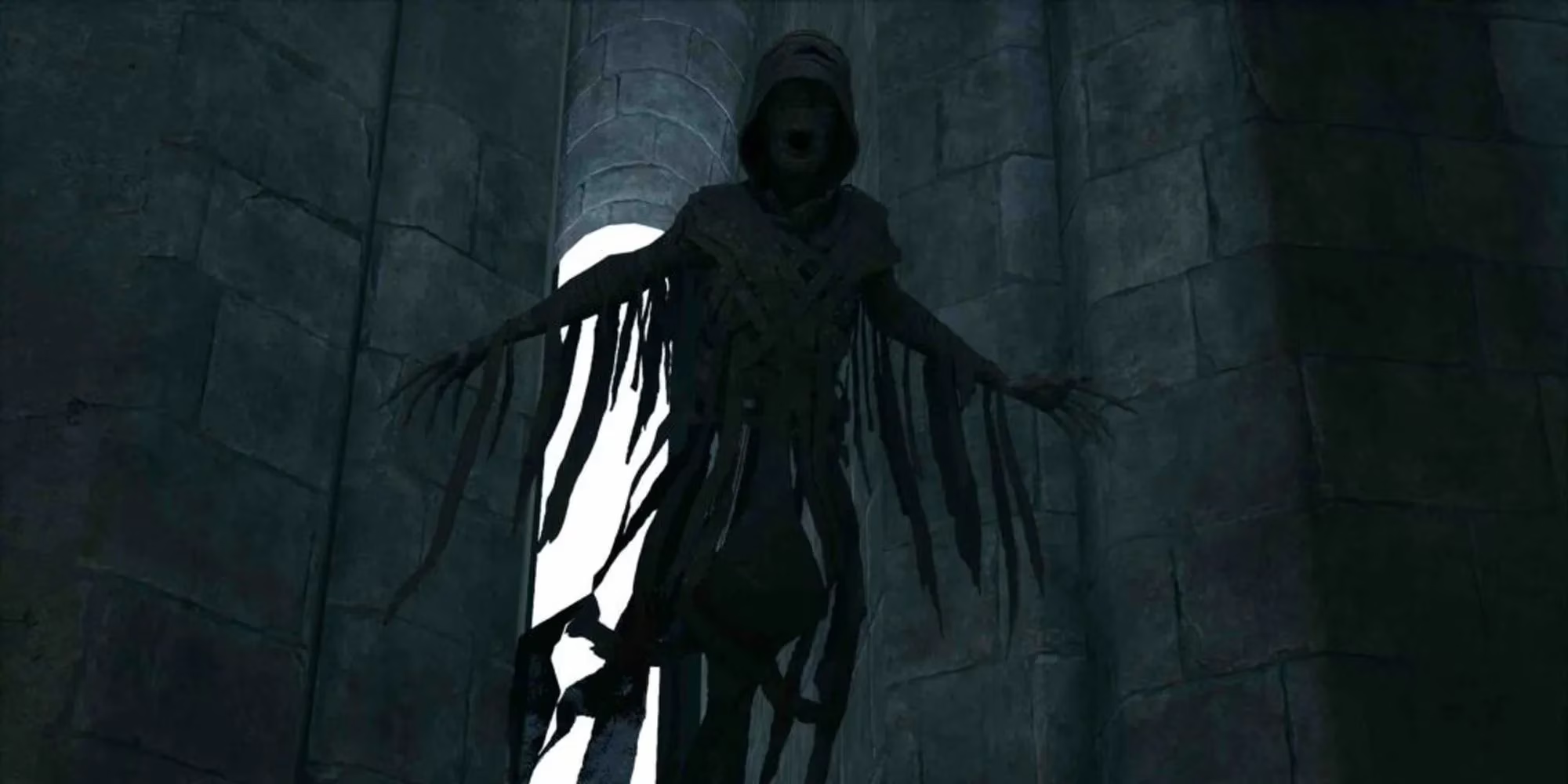
Azkaban: A chilling, atmospheric level that serves as a narrative high point, a true test of character and courage against the Dementors' despair.
This approach borrows a leaf from games like Star Wars Jedi: Survivor—smaller, denser hubs packed with environmental storytelling and meaningful exploration, rather than miles of pretty but passive landscape. It’s about quality over quantity, every single time.
At its core, Hogwarts Legacy was about the fantasy of being a student. Yet, that fantasy was often sidelined for open-world busywork. The sequel has the chance to double down on the Hogwarts student simulator we all crave. This means:
-
Attending Classes: Not as one-off tutorials, but as recurring, engaging events that improve your skills and build relationships with professors and peers.
-
House Identity: Making your House choice matter beyond a common room and a single quest. Rivalries, teamwork, and unique house-point opportunities.
-
Wizarding Pastimes: Integrating mini-games from the lore that actually feel fun and social. A proper game of Wizard's Chess in the common room, a round of Gobstones by the lake, or even attending a Quidditch match as a spectator (or player!).

The creature collection was a bright spot, a charming bit of "fantasy Pokémon" that felt inherently magical. This doesn't need a continent to thrive. A denser, more interactive Forbidden Forest or dedicated magical creature reserves could make this system feel even more intimate and rewarding.
In the end, the call for Hogwarts Legacy 2 is not for less, but for more of what matters. It's a plea to trade the empty countryside for the cramped, magical alleyways. To swap repetitive camps for the echoing halls of magical institutions. To choose the focused, heartfelt experience of a student's journey over the diluted feel of a chore simulator set in a pretty postcard.
The first game proved the magic was there. Now, in 2026, the sequel has the chance to concentrate it, to distill it into a potion so potent it reminds everyone why they fell under the Wizarding World's spell in the first place. Sometimes, the bravest magic isn't expansion—it's refinement ✨.