The Best-Selling Game of 2023 Leaves the Stage Without a Single Nod
When The Game Awards celebrated another crop of industry-defining releases, one name was conspicuously missing. Hogwarts Legacy, the best-selling title of 2023, failed to secure a single nomination—even for the fan-voted Player's Choice award. That absence was not just a one-night talking point. Looking back from 2026, it remains a revealing moment for Avalanche Software's budding franchise and the broader relationship between commercial power and critical recognition.
The game's performance was, by almost every commercial measure, extraordinary. Hogwarts Legacy continued to shift millions of units through late 2023 and beyond, as players embraced the chance to explore Hogwarts School of Witchcraft and Wizardry in the late 1800s. For many fans, the open-world recreation of the castle, Hogsmeade, and the surrounding Highlands delivered exactly the fantasy they had waited years to experience. In a marketplace crowded with superhero epics and sci-fi shooters, a polished single-player wizarding adventure stood out to a massive audience.
Yet critical praise landed in a more mixed range. The narrative was frequently described as competent but unremarkable. The RPG systems pulled from familiar playbooks rather than pushing boundaries. Side quests, gear loops, and combat encounters often played it safe. In a year that delivered Baldur's Gate 3, The Legend of Zelda: Tears of the Kingdom, and Alan Wake 2, that cautious approach made a Game of the Year push nearly impossible. Hogwarts Legacy was a strong first effort and a solid foundation for improvement, but it did not move the needle in the RPG space.
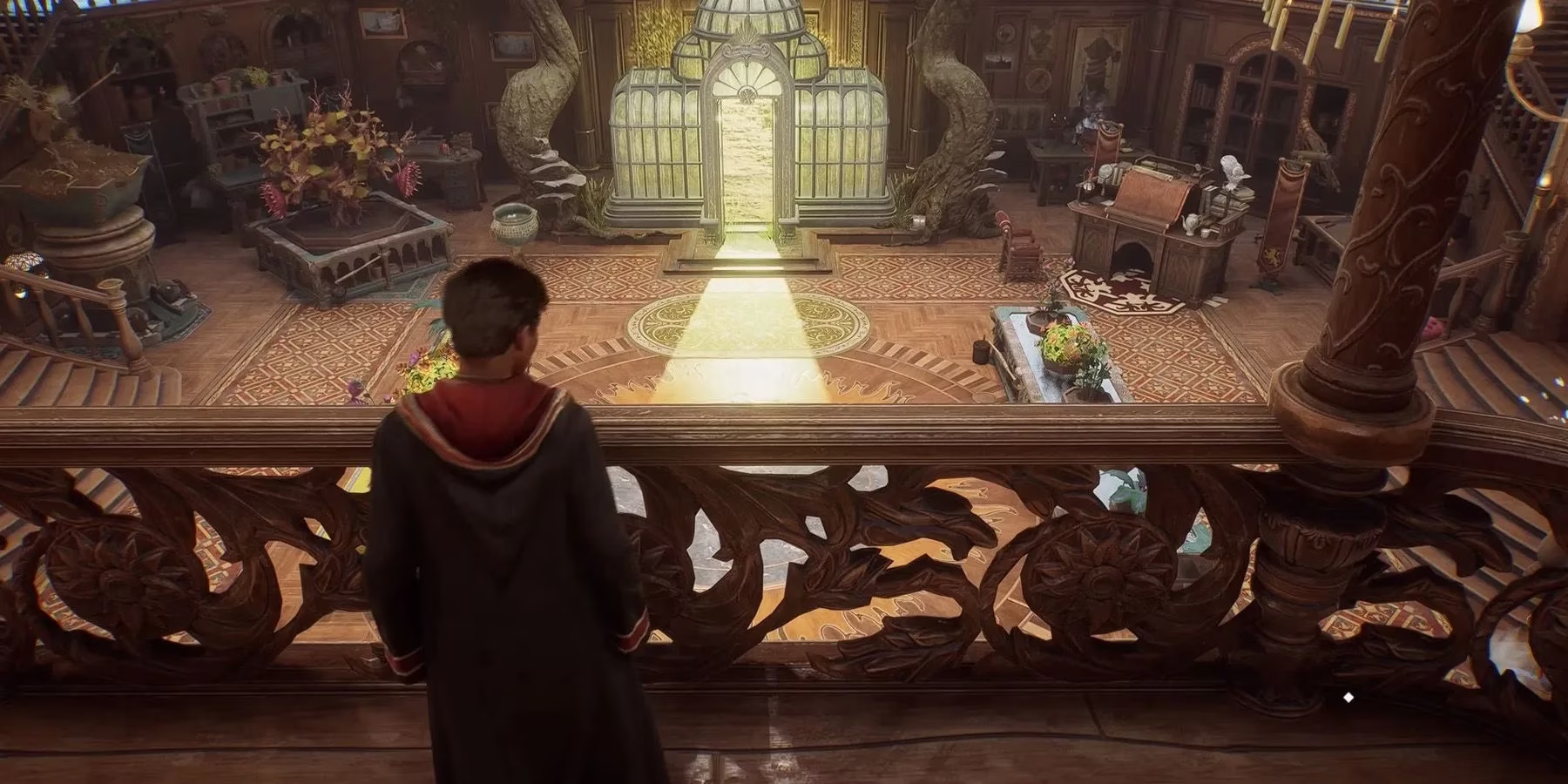
The Game Awards snub extended beyond the main categories. Typically, a best-selling title with strong fan engagement can count on at least a Player's Choice nomination, a bracket that blends critical darlings with live-service juggernauts. In 2023, that list included Baldur's Gate 3, Cyberpunk 2077: Phantom Liberty, Genshin Impact, Marvel's Spider-Man 2, and The Legend of Zelda: Tears of the Kingdom. Hogwarts Legacy, despite its dominance across sales charts all year, was left out entirely.
Part of that exclusion can be traced to the quality of the competition. The Best Role-Playing Game category alone featured Baldur's Gate 3 and Sea of Stars, while the action-adventure field was stacked with Tears of the Kingdom and Alan Wake 2. A commercially successful licensed game, no matter how popular, would have struggled to displace those titles. Still, the complete absence from every ballot felt strange for a title that had been a cultural fixture since its February launch.
The gap between sales and recognition can be seen more clearly in the key award categories that passed Hogwarts Legacy by:
| Category | Competition | Why Hogwarts Legacy Fell Short |
|---|---|---|
| Game of the Year | Baldur's Gate 3, Tears of the Kingdom, Alan Wake 2 | Narrative ambition and innovation outpaced the wizarding adventure |
| Best RPG | Baldur's Gate 3, Sea of Stars | Systems depth and creative mechanics stood out |
| Best Action-Adventure | Tears of the Kingdom, Alan Wake 2 | Genre boundaries were pushed further by rivals |
| Player's Choice | Cyberpunk 2077: Phantom Liberty, Genshin Impact, Spider-Man 2 | Fan voting favored established live-service and franchise heavyweights |
Another layer complicates the picture. Hogwarts Legacy is attached to the Harry Potter license and, by extension, to J.K. Rowling. That association prompted hesitation among some players and industry observers. The Game Awards nominations only fueled the sense that the game was being kept at arm's length because of that connection. Critics and commentators continue to debate whether the title was judged purely on its mechanics or weighed down by the controversies surrounding its source material.
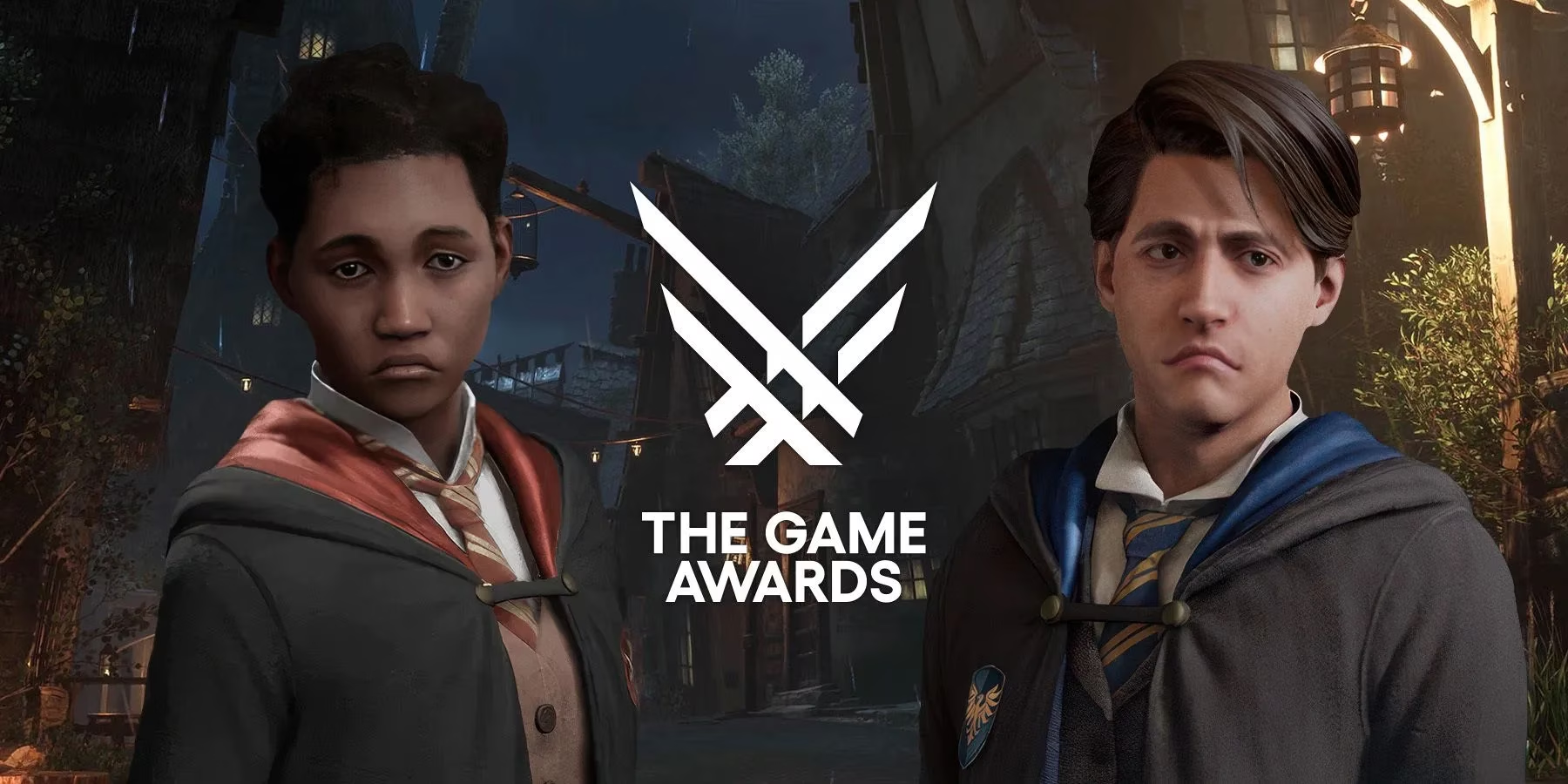
From a 2026 vantage point, the snub reads less like a single editorial choice and more like a preview of a widening divide. Hogwarts Legacy sits on unstable ground between a massive player base that enjoys the experience and a segment of the audience that avoids the series. If a sequel arrives, as strong sales suggest it will, it will inherit that same tension. The next project also carries an opportunity: to deepen the narrative, refine the RPG systems, and prove that the wizarding world can be more than a competent retread of familiar design.
A sequel remains a formality in commercial terms. The original sold too well for the series to simply disappear. But whether the next installment can break through at the same awards shows that ignored the first one is less certain. If the pattern repeats, the divide between the game's enormous player base and its industry recognition could grow even wider. For now, Hogwarts Legacy serves as a useful case study: a best-selling title that learned, perhaps the hard way, that sales charts and awards stages do not always tell the same story. 🎮