You know what’s been on my mind lately as we wrap up the first half of 2026? Hogwarts Legacy. I mean, can we just take a second to appreciate how that game absolutely steamrolled the competition back in 2023? It’s wild to think that even now, three years later, we still haven’t gotten a whisper of an official sequel. Sure, we’ve all been speculating, but the silence from Warner Bros. is almost deafening when you look at the raw numbers Hogwarts Legacy put up. Let’s break it down, because the math doesn’t lie—and frankly, leaving that kind of cash on the table would be sheer madness.
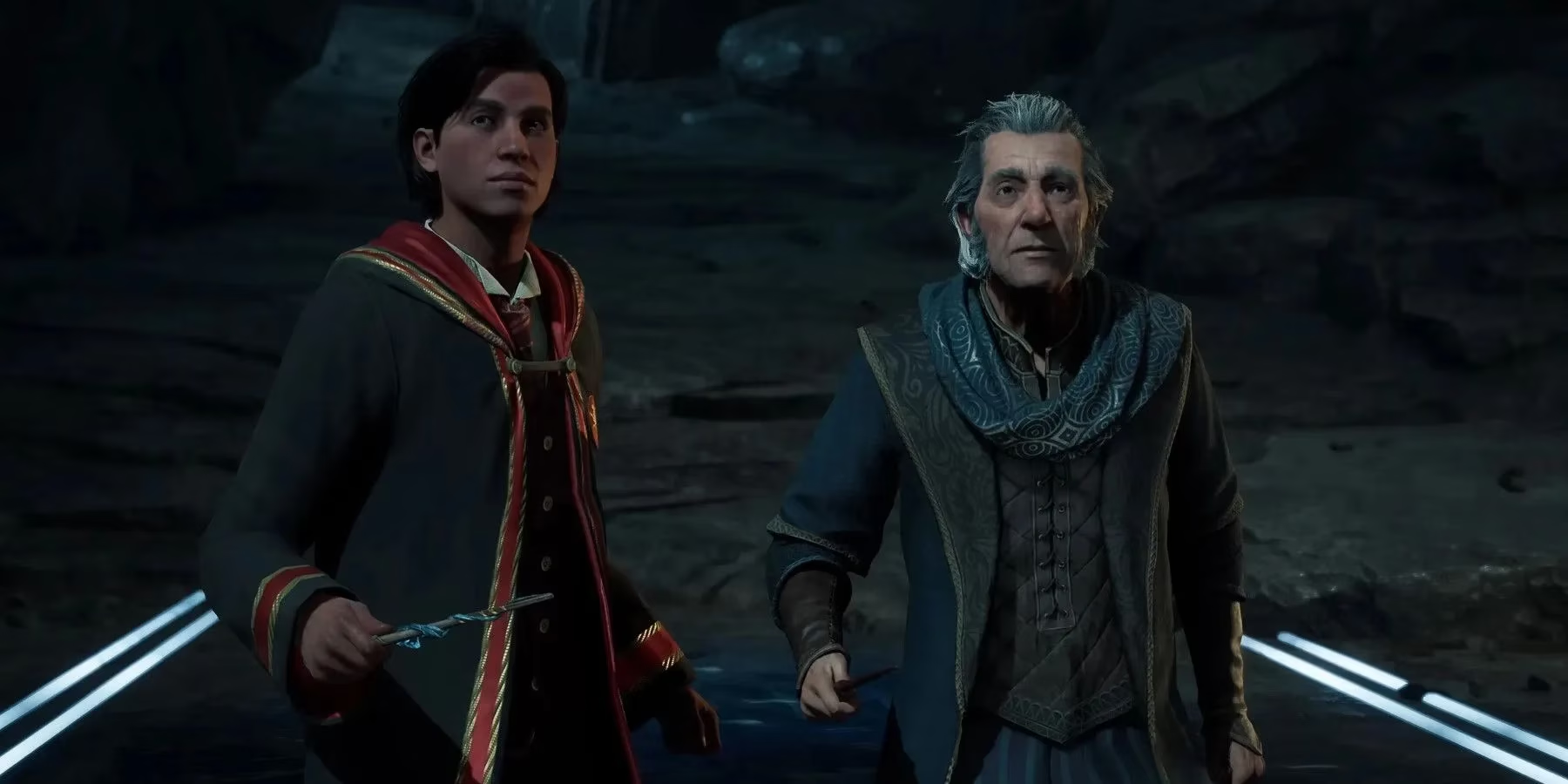
I’ll never forget the shockwaves Hogwarts Legacy sent through the industry. This was a game that, despite not getting a single Game Awards nomination and catching flak for everything from repetitive open-world design to the whole J.K. Rowling controversy, managed to outsell every other new release in 2023. I’m talking about beating the pants off titans like Call of Duty and Madden. Even The Legend of Zelda: Tears of the Kingdom, which was practically a guaranteed Game of the Year contender from the moment it was announced, got eclipsed in total sales. The gaming pundits who sniffed at it as a “middling success” were just plain wrong—the sales figures were absolutely bonkers.
And honestly? I get why some folks might’ve underestimated it. If you only looked at the lack of awards buzz and a few lukewarm reviews, you’d think it was just another Harry Potter cash grab. But you can’t argue with the bottom line: the game was a phenomenon. If we were still living in a world where physical discs ruled, retailers would’ve been scrambling to restock shelves. The demand was that insane. But here’s the elephant in the room: how much of that success was the game itself, and how much was the sheer gravitational pull of the Harry Potter IP?
Let’s be real—it’s a huge chunk. The idea of a full-blown Harry Potter RPG where you make your own witch or wizard and actually attend Hogwarts? That’s a license to print money. I still can’t believe nobody capitalized on that idea sooner. It tapped into the fantasies of both hardcore gamers who wanted deep customization and casual fans who just wanted to wander the halls, cast spells, and fly around on a broom. The fanbase was ready to dive headfirst into the Wizarding World the moment the game dropped. So yeah, Avalanche Software absolutely nailed the vibe and the moment, but the IP was the rocket fuel.
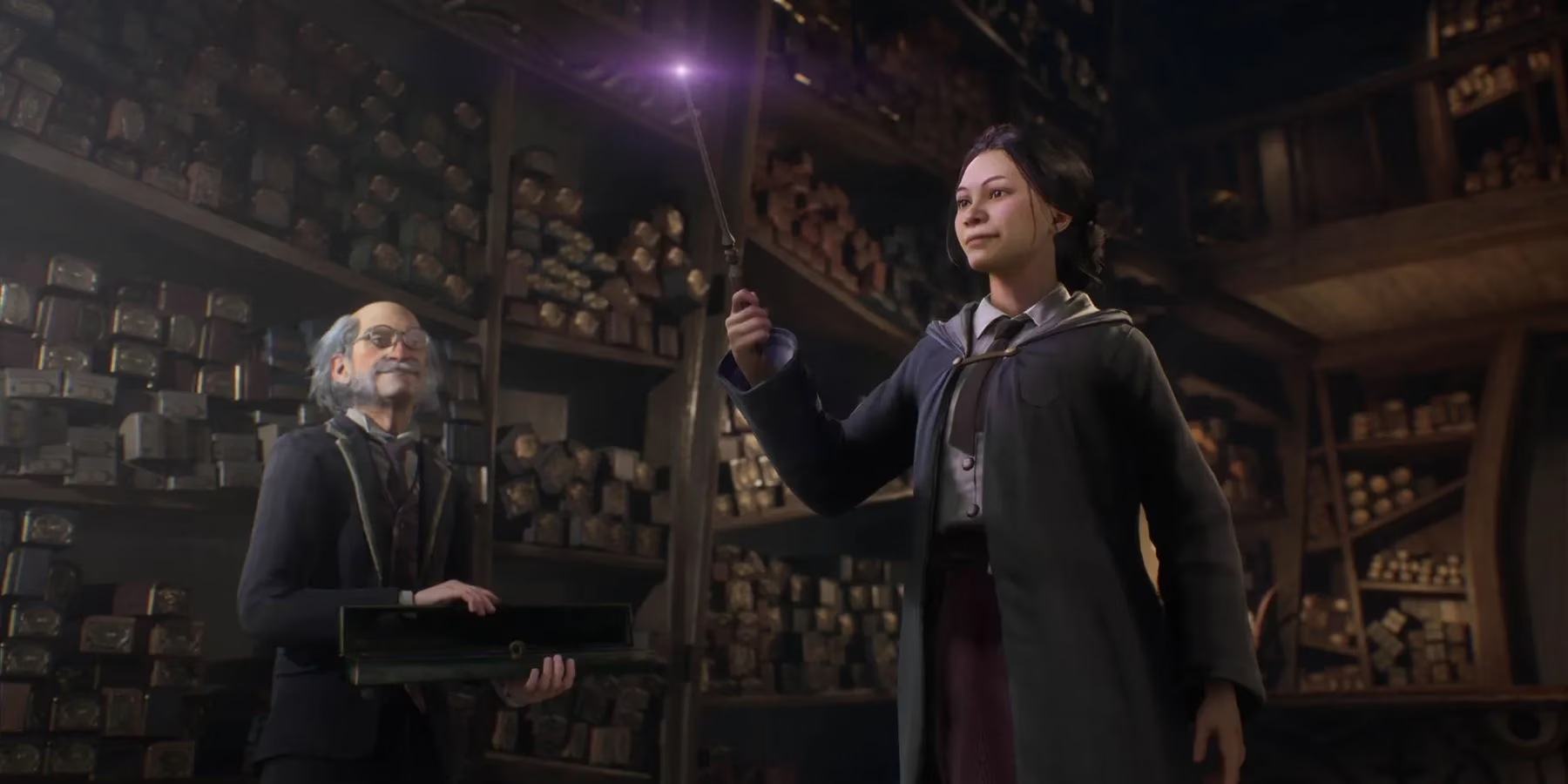
Now, here’s the kicker. With all that success, you’d think a sequel would be a no-brainer, right? I mean, Hogwarts Legacy didn’t just meet expectations—it blew them out of the water. Warner Bros. would be leaving a mountain of money on the table if they didn’t greenlight a follow-up. And yet, as of 2026, we’re still playing the waiting game. No announcement, no teaser, nada. Part of me wonders if the studio’s being extra careful, wanting to avoid the sophomore slump that plagues so many big franchises. After all, the first game had its fair share of criticism: the open-world activities got repetitive, the morality system was practically nonexistent, and the story, while charming, wasn’t exactly going to give The Last of Us a run for its money. A sequel could smooth all those rough edges.
What excites me most is thinking about how much easier a second outing would be for Avalanche. They were stepping into the open-world RPG pool for the first time with Hogwarts Legacy, and honestly, they did a bang-up job considering the scope. Now they’ve got the experience, the engine, and a boatload of high-quality assets just sitting there. The sequel could ramp up the magic (pun intended) by deepening the companion system, maybe adding Quidditch (I know, I know—that’s a whole can of worms), or taking us to brand-new corners of the wizarding world beyond Hogwarts. A spinoff set in a different wizarding school or time period? That would be chef’s kiss. The framework is already there; the devs just need to build on it.
I’ve seen some gaming forums speculating that the silence could mean they’re cooking up something even bigger—maybe a live-service twist or a narrative sequel that continues your character’s story. Whatever it is, I’m keeping my fingers crossed. Hogwarts Legacy proved that a game doesn’t need to be a critical darling to be a knockout success. It’s the kind of title that transcended the usual gamer circles and became a cultural moment. If the sequel can deliver the same breadth of exploration with more meaningful choices and a tighter story, it’s going to be an absolute barnburner.
At the end of the day, all signs point to a sequel being inevitable. The Harry Potter franchise is still a juggernaut, and Avalanche has already shown they’ve got the chops. So while 2026 might not have brought us that official reveal yet, I’m not sweating it too much. Good things come to those who wait, and if the sequel even gets close to recapturing the magic of the first game—while fixing its weak spots—we’re in for a treat. Until then, I’ll just be over here replaying the Great Hall feast scene and dreaming about what’s next.