When Hogwarts Legacy dropped in 2023, it wasn't just another video game—it was a seismic shift for the Harry Potter universe. Players found themselves whisked away to a late-1800s wizarding world, far removed from the familiar tales of Harry, Ron, and Hermione. This fresh take breathed new life into an IP that had long been shackled to movie tie-ins, offering an original story that felt immersive and expansive. Fast forward to 2025, and its impact still resonates, proving that fantasy franchises can thrive when given the freedom to explore uncharted eras. The game's success wasn't just about nostalgia; it was about delivering what fans craved: a vast, explorable Hogwarts, broomstick flights over sweeping landscapes, and spell-slinging combat that borrowed smartly from Soulslike games. Yet, as players dive back in today, they can't help but wonder—why hasn't The Lord of the Rings followed suit with a similar open-world action-RPG? After all, both IPs share a history of hit-or-miss adaptations, but Hogwarts Legacy showed that breaking free from cinematic constraints is the key to longevity.
Reflecting on Hogwarts Legacy, it's clear why it became a benchmark. The game nailed elements that had been missing for years in Harry Potter games. For starters, the broomstick flight mechanic allowed players to soar through an open world, feeling the wind rush past as they uncovered secrets. Then there's Hogwarts Castle itself—a labyrinthine wonder filled with environmental puzzles that kept gamers hooked for hours. 😊 The customization options were a dream come true, letting players choose their Hogwarts house and tailor their protagonist's journey. But the real star? Wand-based combat. It took cues from challenging Soulslike designs, with a broad range of categorized spells that made battles dynamic and rewarding. Players could unleash fireballs one moment and shield charms the next, creating a fluid, strategic experience. And let's not forget the Room of Requirement—it went beyond mere decoration, offering spaces to brew potions, grow magical flora, and even breed creatures like hippogriffs. This level of personalization made the wizarding world feel alive and deeply engaging.
However, Hogwarts Legacy wasn't flawless. Its story, while original and free from grating fan service, didn't resonate as strongly as its gameplay elements. Many players felt it was overshadowed by the action-RPG mechanics, and the absence of fan-favorites like Quidditch or a collectible mini-game akin to Gwent left a noticeable gap. These omissions, though, might just be blessings in disguise for sequels—they provide easy layups for future installments to build upon. As of 2025, Warner Bros. is likely eyeing this framework for upcoming Harry Potter titles, given the game's undeniable success. But here's where the conversation takes a leap: The Lord of the Rings IP has been sitting on untapped potential. While Monolith's Middle-earth: Shadow of Mordor and Shadow of War were crowning achievements with their innovative Nemesis System, other entries like The Lord of the Rings: Gollum fell flat, leaving fans hungry for more. A proper open-world action-RPG could be the ticket, blending exploration, combat, and lore in ways that Hogwarts Legacy mastered.
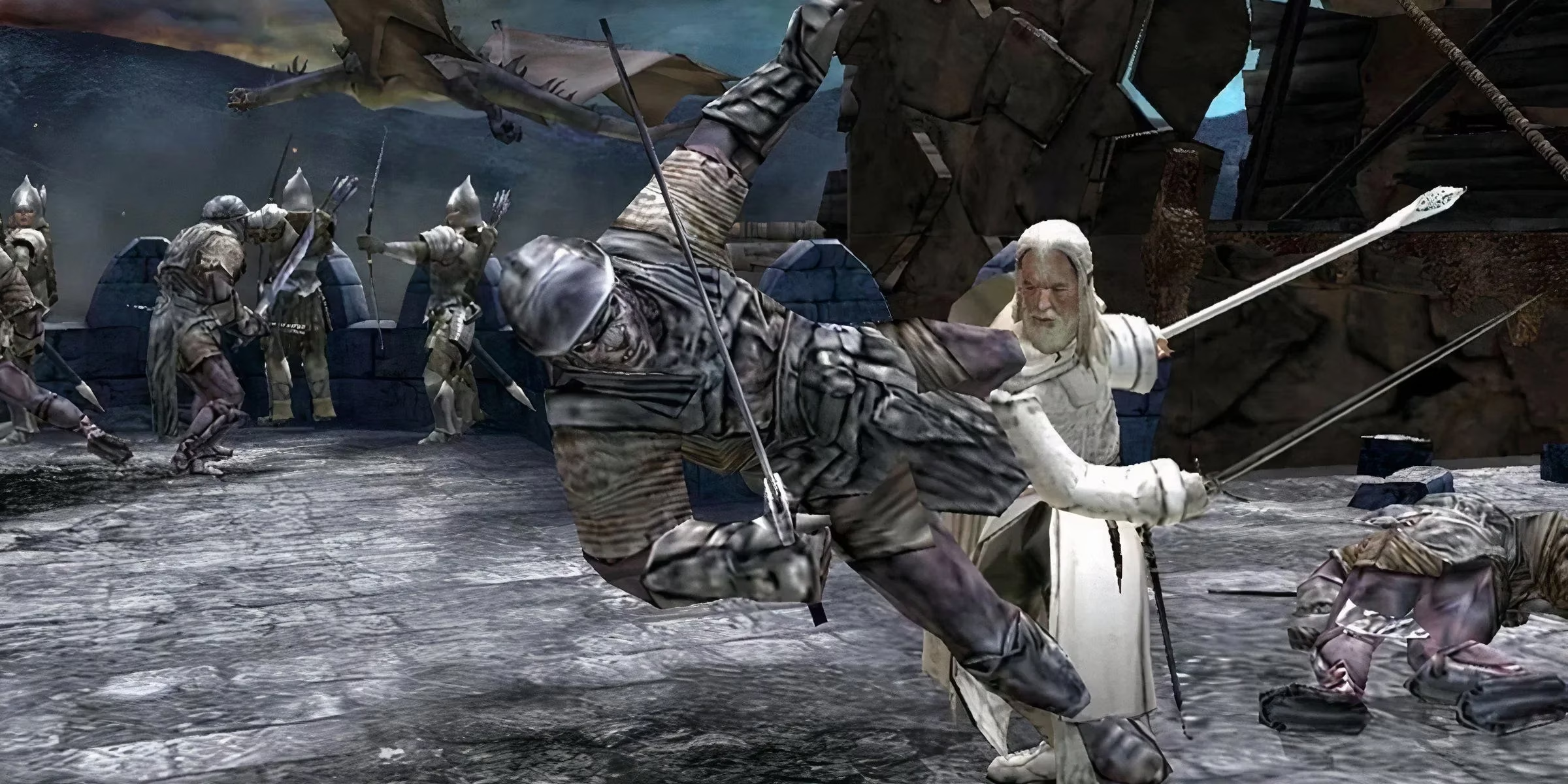
Comparing the two franchises, it's fascinating how Hogwarts Legacy revitalized its IP by ditching movie plots, whereas Lord of the Rings has had a rollercoaster ride. The Middle-earth games showed glimpses of greatness—like the co-op fun in The Lord of the Rings: The Return of the King—but they've yet to achieve the same immersive depth. Imagine a Lord of the Rings game with Soulslike touches, similar to Star Wars Jedi: Fallen Order. Players could customize a hero—be it a human, elf, dwarf, or hobbit—and embark on quests across Middle-earth, battling orcs with combo-driven combat or exploring iconic locations like Rivendell. The possibilities for creativity are endless, from dynamic weather systems affecting gameplay to deep character progression. Yet, as of 2025, no such project has emerged, which feels like a missed opportunity. 🎮
Looking ahead, as a seasoned gamer who's spent countless hours in both worlds, I envision a future where The Lord of the Rings finally embraces this blueprint. By 2026, we could see a game that not only matches Hogwarts Legacy's scope but surpasses it with richer storytelling and innovative mechanics. Picture this: an open-world adventure where players influence faction alliances or uncover ancient elven secrets, all wrapped in stunning visuals. It's not just about copying success; it's about evolving it. After all, Hogwarts Legacy proved that fantasy games can thrive with originality—now it's time for Middle-earth to rise to the challenge. The journey might be uncertain, but the potential for something truly terrific is undeniable.