As the wizarding world holds its breath in 2026, the specter of Quidditch looms over the highly anticipated sequel to Hogwarts Legacy like a rogue Bludger waiting to strike. The original game masterfully conjured the halls of Hogwarts, yet its omission of the beloved, broomstick-bound sport left a gaping hole in the castle's sky—a void fans have been screaming to fill ever since. While the sequel possesses all the magical ingredients—polished flight mechanics, sprawling open-world broomsticks, and a fanbase hungrier than a Thestral at a feast—integrating Quidditch is not a simple flick of the wand. The challenge isn't just adding it; it's transforming this chaotic, team-based spectacle into an optional mini-game that can rival the legendary status of titles like The Witcher 3's Gwent. The task ahead for Avalanche Software is akin to teaching a Hungarian Horntail to tap dance—thrilling to imagine, perilous to execute, and requiring a flawless performance to avoid being burnt to a crisp by disappointed fans.
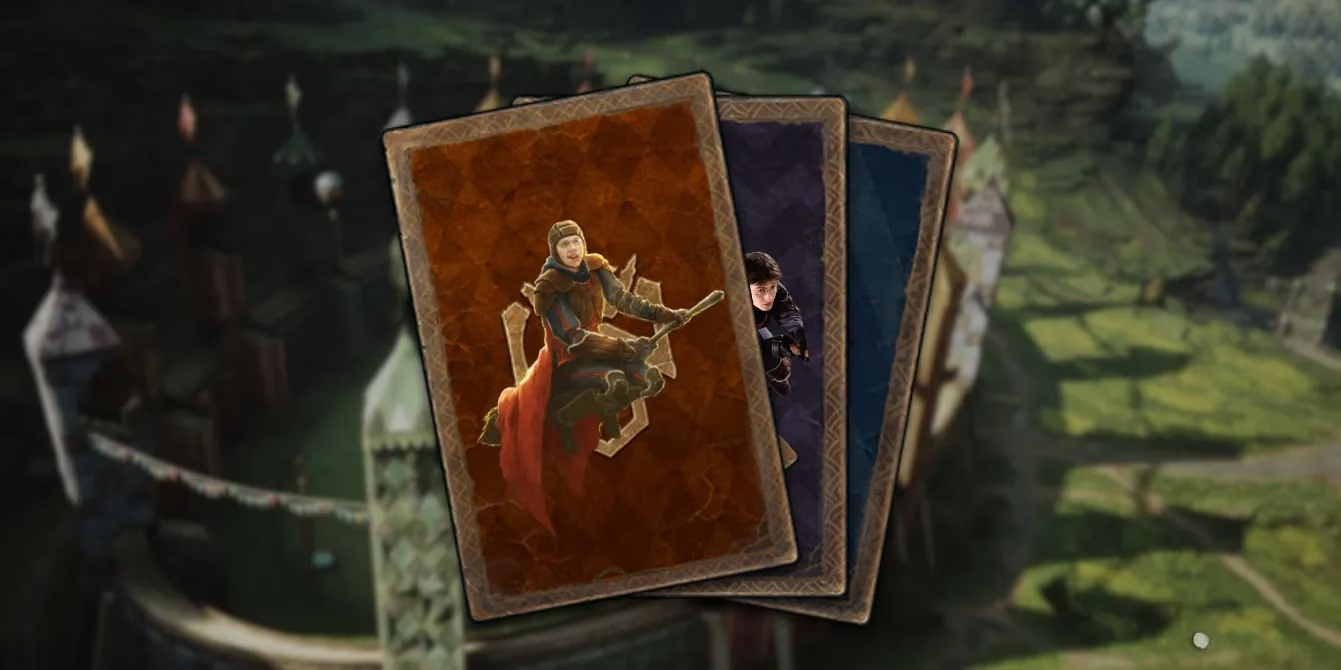
The Daunting Arena: Why Quidditch Isn't Another Gwent
Let's be brutally honest: Quidditch, for all its wizarding glory, is a logistical nightmare compared to the elegant simplicity of a card game. Gwent succeeded because it was a pocket-sized universe of strategy, as portable and socially flexible as a wizard's coin purse. Quidditch, by stark contrast, is a behemoth.
| Feature | Card Games (e.g., Gwent) | Quidditch |
|---|---|---|
| Setup | Anywhere, anytime—in a tavern, by a campfire, mid-quest. | Requires a massive stadium, 14 players, and clear weather. 🏟️☀️ |
| Player Count | Intimate 1-vs-1 duels of wit. | A cacophonous 7-vs-7 aerial ballet of brutality. |
| Strategic Depth | Built through hundreds of unique cards, factions, and combos. | Primarily reliant on player skill, broom stats, and three fixed ball types. |
Quidditch's inherent nature clashes with the on-demand, drop-in/drop-out philosophy that made optional mini-games so beloved. You can't just challenge a random Hufflepuff to a quick Snitch chase on the way to Herbology. This isn't a flaw of the sport, but a fundamental design hurdle. Integrating it as a meaningful side activity is like trying to fit a Whomping Willow into a greenhouse—possible with magic, but it will dominate and potentially disrupt the entire ecosystem.
Broomsticks & Blueprints: Learning from Quidditch Champions
For Quidditch to not just exist but excel in the sequel, it must steal pages from the playbook of games like Harry Potter: Quidditch Champions. The path to victory lies in customization, progression, and environmental variety.
🔮 The Broomstick Metagame: Imagine not just flying, but collecting and customizing brooms like rare Pokémon cards. Each broom wouldn't just be a reskin; it would be a strategic tool.
-
The Thunderbolt VII: Blazing top speed but poor handling, perfect for Chasers.
-
The Oakshaft 79: A tank-like beater's broom, slow but incredibly stable.
-
The Nimbus 2026: A balanced all-rounder, the "default" choice with a hidden trick.
This transforms Quidditch from a simple sport into a gear-based RPG element. Players would tinker with their loadout before a match, strategizing based on their position and opponent, adding a layer of depth that pure reflex gameplay lacks.
🌍 Beyond Hogwarts: The sequel must break free from the Quidditch pitch's confines. Picture epic matches in fantastical locales:
-
Dueling in the stormy peaks of the Scottish Highlands, where wind shear affects broom control.
-
A midnight tournament in the Forbidden Forest, with Bludgers camouflaged among the trees.
-
An international friendly match at the Bulgarian stadium, with roaring crowds of thousands.
These unique venues would act as dynamic gameplay modifiers, making each match feel distinct. A match in a windy canyon becomes a game of endurance, while a forest match turns into a game of perception and surprise.
The Strategic Snitch: Evolving the Core Gameplay
To combat the "limited strategy" critique, the sequel's Quidditch needs more than just flying and throwing. It needs systems.
Potential Gameplay Layers:
-
Team Tactics Slots: Before a match, set 3 tactical plays for your AI teammates (e.g., "Focused Beater Defense," "Swarming Chaser Offense").
-
Player Progression: Level up your character in specific positions (Seeker, Keeper, etc.), unlocking special abilities like a temporary speed burst or a pinpoint accuracy pass.
-
Dynamic Season & League: Participate in the Hogwarts House Cup across an in-game school year, with standings, rivalries, and championship matches that affect your house's reputation in the castle.
This framework would make Quidditch feel less like a disconnected arcade game and more like a living, breathing part of the wizarding student's life—a career path as viable as becoming an Auror or a Magizoologist.
Conclusion: A High-Stakes Wager on the Future
The inclusion of Quidditch in a Hogwarts Legacy sequel is a high-stakes gambit, a bet placed on a single, volatile game of chance. It cannot and should not try to replace the card-game model perfected by Gwent. That would be like asking a symphony orchestra to compete with a solo violinist in a broom closet—they're different arts entirely. Instead, Quidditch must aspire to be its own category-defining masterpiece: a deep, rewarding, and spectacular optional pursuit that leverages the full power of the game's world.
If executed with the care of a master potioneer—blending the customization of Quidditch Champions, the strategic progression of an RPG, and the environmental wonder of the open world—it could soar. It could become the golden standard for physical mini-games, a feature so compelling it becomes a primary reason to play. But if it's tacked on as a shallow, repetitive afterthought, it will crash to earth faster than a Seeker who's spotted a Snitch but forgotten how to brake. The Bludger is in the developer's court; the entire wizarding world is watching to see if they can score the winning goal, or if this dream will vanish like a ghost through the walls.