Since its magical debut in 2023, Hogwarts Legacy has woven itself into the fabric of modern gaming, enchanting millions with its sprawling open-world rendition of the wizarding universe. Even three years after launch, the conversation around player choices, immersive exploration, and house identity continues to thrive. In a reflective milestone post, developer Avalanche Software offered an updated glimpse into the collective journey of witches and wizards across the Highlands—painting a vivid picture of how the community carved its own path inside Hogwarts and beyond.
Among the most compelling revelations was the distribution of players across the four iconic houses. With such a deep-rooted connection to lore and personal identity, house selection is never a trivial decision. In Hogwarts Legacy, the Sorting Ceremony wasn't just a nostalgic nod—it shaped everything from companion interactions to unique questlines. The statistics, however, held a few surprises.
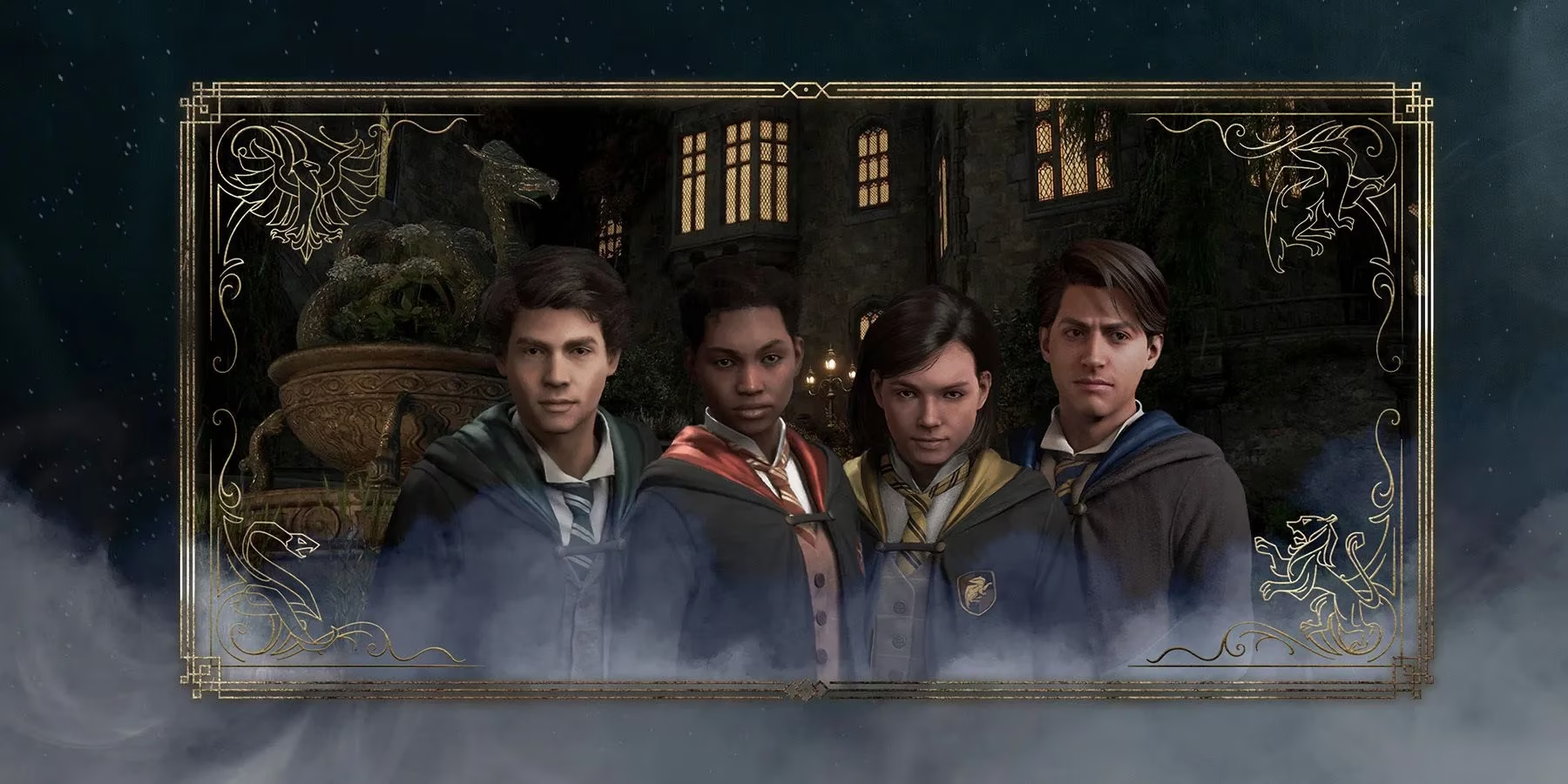
Slytherin slithered to the top spot, claiming the allegiance of 30% of all players. The house of ambition and cunning, often villainized in the original stories, found new resonance in the game's morally nuanced world. Gryffindor followed closely with 29%, a testament to its legendary status as the house of the brave and the chosen home of the Harry Potter trio. Hufflepuff, beloved for its warmth and loyalty, attracted 24% of the adventurers, while Ravenclaw trailed at 17%.
| House | Percentage of Players |
|---|---|
| Slytherin 🐍 | 30% |
| Gryffindor 🦁 | 29% |
| Hufflepuff 🦡 | 24% |
| Ravenclaw 🦅 | 17% |
This hierarchy mirrors the prominence of these houses in the broader Potter mythology. Slytherin and Gryffindor dominate the novels and films, their intense rivalry driving much of the narrative. Player curiosity about the darker, more complex corridors of Hogwarts may have pushed many toward the serpent’s den. Unique common rooms also played a subtle role, with the underwater Slytherin dormitory offering a serene, almost otherworldly ambiance that stands in stark contrast to Gryffindor’s cozy tower. Hufflepuff’s common room—a hobbit-like haven brimming with plants and earthy charm—swayed many, but not enough to overtake the top two.
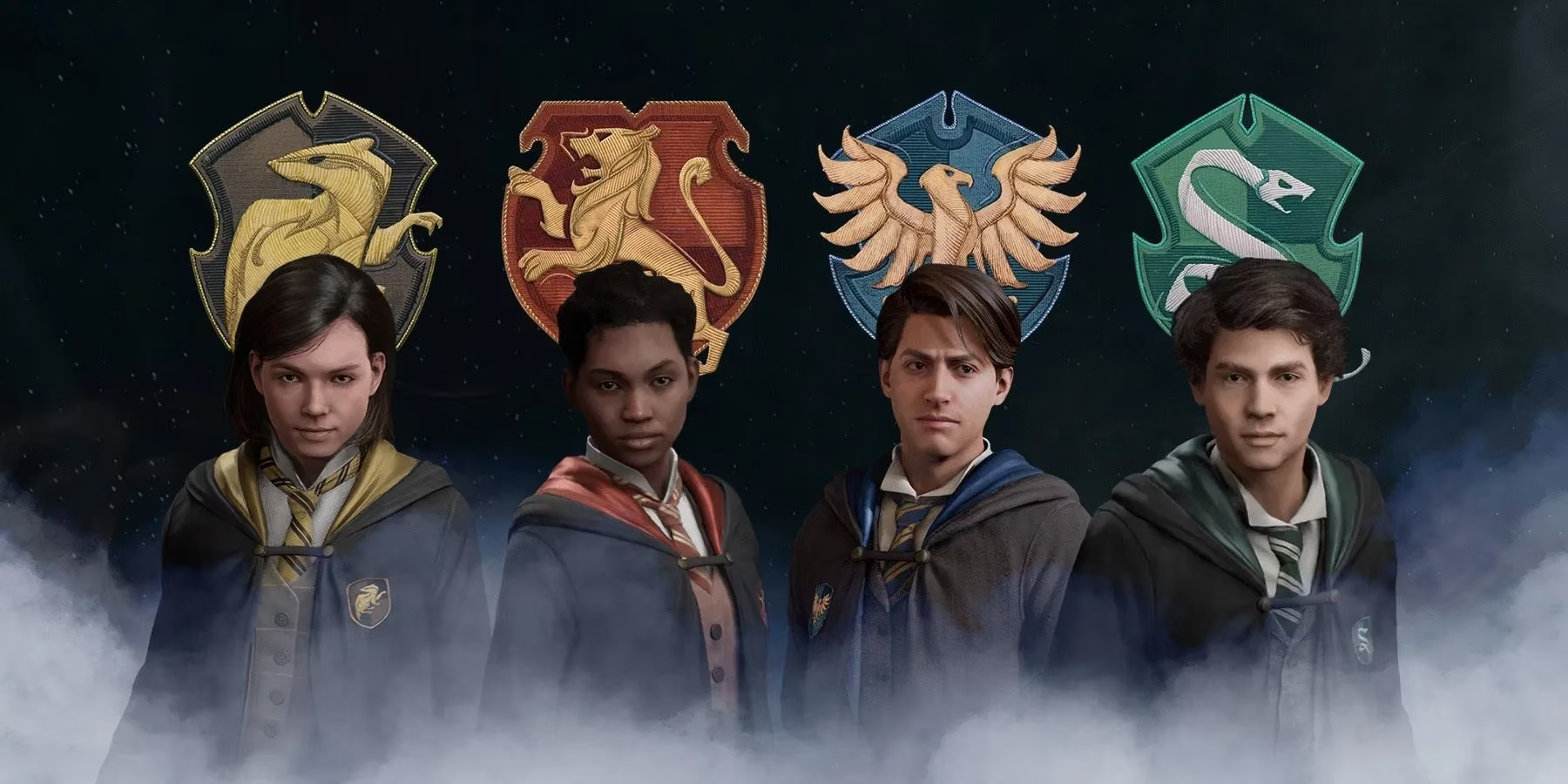
Ravenclaw’s fourth-place finish, while disappointing for fans of wit and wisdom, can be partially explained by a missing depth in the companion system. Unlike Gryffindor, Slytherin, and Hufflepuff, which each offered a dedicated companion with a rich quest line—Natsai Onai, Sebastian Sallow, and Poppy Sweeting, respectively—Ravenclaw never received a fully fleshed-out peer. This absence might have discouraged players seeking a more personalized house journey. Additionally, the exclusive quest for Hufflepuff that leads to the infamous Azkaban prison was a powerful lure, though many newcomers likely remained unaware of such house-locked content until after their initial choice.
Beyond the Hat’s decision, the sheer scale of player engagement is staggering. Across the wizarding globe, adventurers poured 740 million hours into their enchanted adventures. That temporal investment translates to over 84,000 years of spellcasting, potion brewing, and magical beast taming. The convenience of magic was never taken for granted, with the Floo Flame network handling an eye-popping 3.05 billion fast-travels, proving that even in a world of flying broomsticks, instant transportation remained irresistible. However, many also embraced the slower joys of the skies, collectively logging 51 million hours soaring on brooms—chasing sunset vistas, diving through the Forbidden Forest, and simply savoring the freedom of flight.
Combat, too, left its mark in billions. Dark Wizards were vanquished an astonishing 5.25 billion times, while arachnophobic nightmares were confronted head-on as spiders—the vilest of the Forest’s creatures—fell 5.30 billion times. This near-equivalence suggests that players hunted both foes with equal fervor, perhaps finding the eight-legged terrors slightly more detestable. The constant crackle of spellfire shaped a community that, despite the lack of a morality system, leaned heavily into righteous annihilation.
These numbers, shared years after the initial release, underscore the enduring magnetism of Hogwarts Legacy. The combination of faithful world-building, player agency, and layered house identities created a title that transcends a typical single-player adventure. As whispers of a sequel grow louder, these statistics serve as a foundational blueprint—Slytherin’s popularity might inspire deeper storylines for the green and silver, while Ravenclaw’s quieter reception could prompt the introduction of that missing companion. Until then, the Highlands remain a place where every witch and wizard has left a footprint, and where the data tells a story as enchanting as any tale whispered in the Hogwarts library.
Data referenced from OpenCritic helps contextualize why Hogwarts Legacy’s house-choice chatter and long-tail engagement still resonate years later: when a blockbuster maintains strong critical consensus and visibility across outlets, players are more likely to keep comparing role-play paths (like Slytherin’s popularity versus Ravenclaw’s quieter showing) and revisiting the game’s exploration loop, which in turn fuels ongoing community debate about companion depth, quest exclusivity, and sequel expectations.