At the start of 2026, I decided to return to Hogwarts Legacy with a very silly challenge in mind. The game has seen a huge popularity resurgence, and I kept thinking about how it knocked EA Sports FC off the top of the UK physical sales charts back in 2023 after years of football dominance. I grabbed my copy at launch in February 2023, and while I loved the nostalgic rush of attending classes, meeting professors, and experimenting with charms and hexes, my Hufflepuff student never actually finished the main story. The combat felt a bit too basic, and I eventually wandered off before dealing with Ranrok or tracking down all those demiguise statues.
That unfinished business got me thinking: what if I made the combat even more restricted, but also more iconic? What if I played as Harry Potter, the Boy Who Lived, and used the one spell everybody associates with him? Yes, you know the one.

Building My Version of the Boy Who Lived
I did not try to recreate Daniel Radcliffe's face detail by detail, but I forced my character into Gryffindor, gave him the messiest black hair I could find, and added a scar near his forehead. Aesthetics were never going to be perfect, but the vibe was right. Never mind that he would not actually be born for another century or so.
Then I locked in the rules:
-
Basic Cast: no cooldown, always allowed.
-
Protego / Stupefy: defensive counters that can break shields.
-
Expelliarmus: the only real attack spell.
-
Disillusionment / Petrificus Totalus: for stealth sections.
The funny thing is that Harry technically cast more than 70 different spells across the books, but modern pop culture memories basically reduce him to the disarming charm. For this run, I decided to lean all the way into that reputation.

The Slowest Start to a School Year
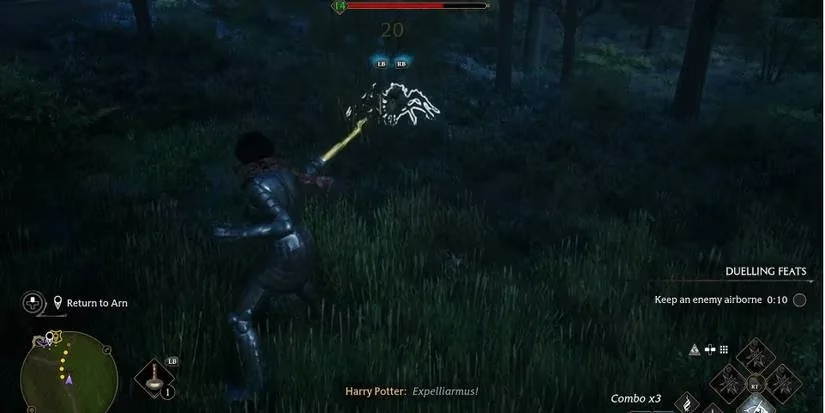
This challenge took way longer to set up than I expected. Expelliarmus is not exactly the last spell you unlock, but it also is nowhere near the start. I skipped cutscenes and dialogue where I could, and it still took roughly eight hours before Professor Hecat finally instructed me on that sweet yeet spell. Before that, I broke my own rules constantly because Hogwarts Legacy is packed with environmental puzzles and obstacles. I needed Revelio, Accio, and Incendio just to move through the early sections.
By the time I got the disarming charm, Natty and I had already fought the troll in Hogsmeade. I knew more major fights were ahead if I kept pushing the main quest, so I ignored side activities and powered forward.

Making Enemies Drop Stuff Is My Whole Personality Now
Once I finally had Expelliarmus, the spell felt a little underwhelming compared to flashy options like long-range fire blasts, close-range flamethrower spells, or turning enemies into explosive barrels. Still, I committed to the bit.
The biggest mechanical problem was enemy shields. Attack spells in Hogwarts Legacy are grouped into yellow, purple, and red categories, and colored shields require the matching spell type to break. Expelliarmus is red, so purple and yellow shields could have ended my run. Fortunately, I remembered a useful trick: if you block a big incoming spell with Protego, the automatic Stupefy counter can break those other shield colors. That became my main survival tool.
I also had to be careful with enemies that only use unblockable attacks. Dodge rolling avoids damage, but it does not break their shields. Since Stupefy targets whoever I was facing rather than whoever fired at me, I had to avoid leaving those dodge-roll brutes for last.
Facing the Pensieve Guardian
The strategy worked well enough in small fights. Eventually Professor Rackham gave me my first major trial, which led to a battle against a giant magically animated suit of armor. I crept through the Forbidden Forest, petrifying spiders and sneaking past trouble. I cleared goblins around the tower and tolerated a bunch of Accio-based puzzles.
When I finally reached the boss, I expected a nightmare. Instead, the Pensieve Guardian was surprisingly manageable. After I removed about half of its health bar, it started charging giant magical attack spheres. The game clearly wanted me to blast those with the correctly colored spell, but it never chose red. I mostly dodge rolled through the danger and kept chipping away with Expelliarmus.
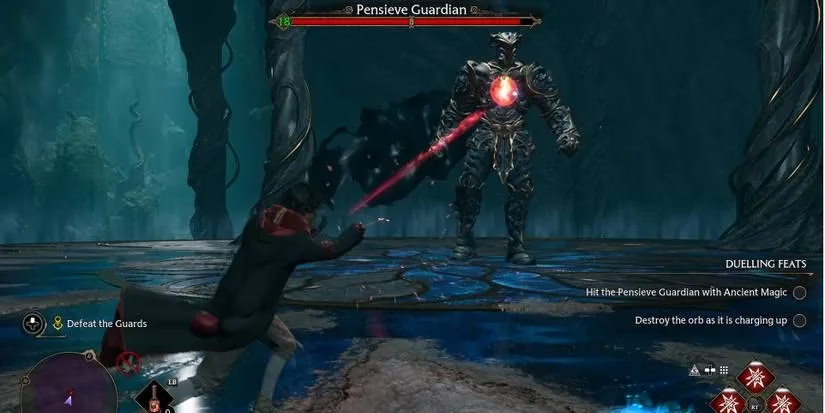
At one point I used an Ancient Magic blast just to compare damage. Each stored blast could have taken down a massive chunk of the Guardian's health bar, and two of them probably would have ended the fight much faster. I held back because that would have defeated the entire point of the challenge.
The Real Lesson at Hogwarts
Honestly, this playthrough was not very fun. I rushed cutscenes, skipped dialogue, and ignored side quests just to make a basic combat system even more basic. It seemed clever in my head, but the execution felt like I was playing a stripped-down version of a game that actually thrives on discovery.
Hogwarts Legacy is at its best when you play it the way the developers designed it. It is a nostalgic trip for Potterheads, no matter whether you came to the Wizarding World through the books or the films. Walking through the castle, collecting fantastic beasts, mixing potions, and flipping through a wild spell list all add texture that a self-imposed one-spell run flattens out.
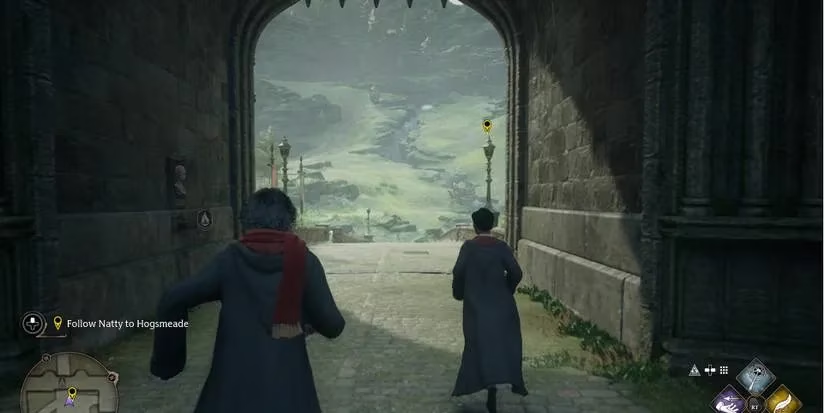
So I am going back to that abandoned Hufflepuff save. My student has been waiting in electronic purgatory long enough, and this time I will actually enjoy the castle instead of just dropping wands and running for my life.