It was well past midnight in the fall of 2026 when I stumbled upon something that made my stomach twist. I had returned to Hogwarts Legacy for what must have been my seventh playthrough—something about the Scottish Highlands rendered in Unreal Engine never gets old, even three years after release. My level 40 Slytherin witch was weaving through a bandit camp just outside Hogsmeade, casually juggling Incendio and Levioso combos, when a small notification popped up on the left side of my screen. A Duelling Feat. Nothing unusual at first; the game loves to toss these bite-sized combat challenges at you when you least expect them. But then I read the words: “Torture an enemy that is on fire.”
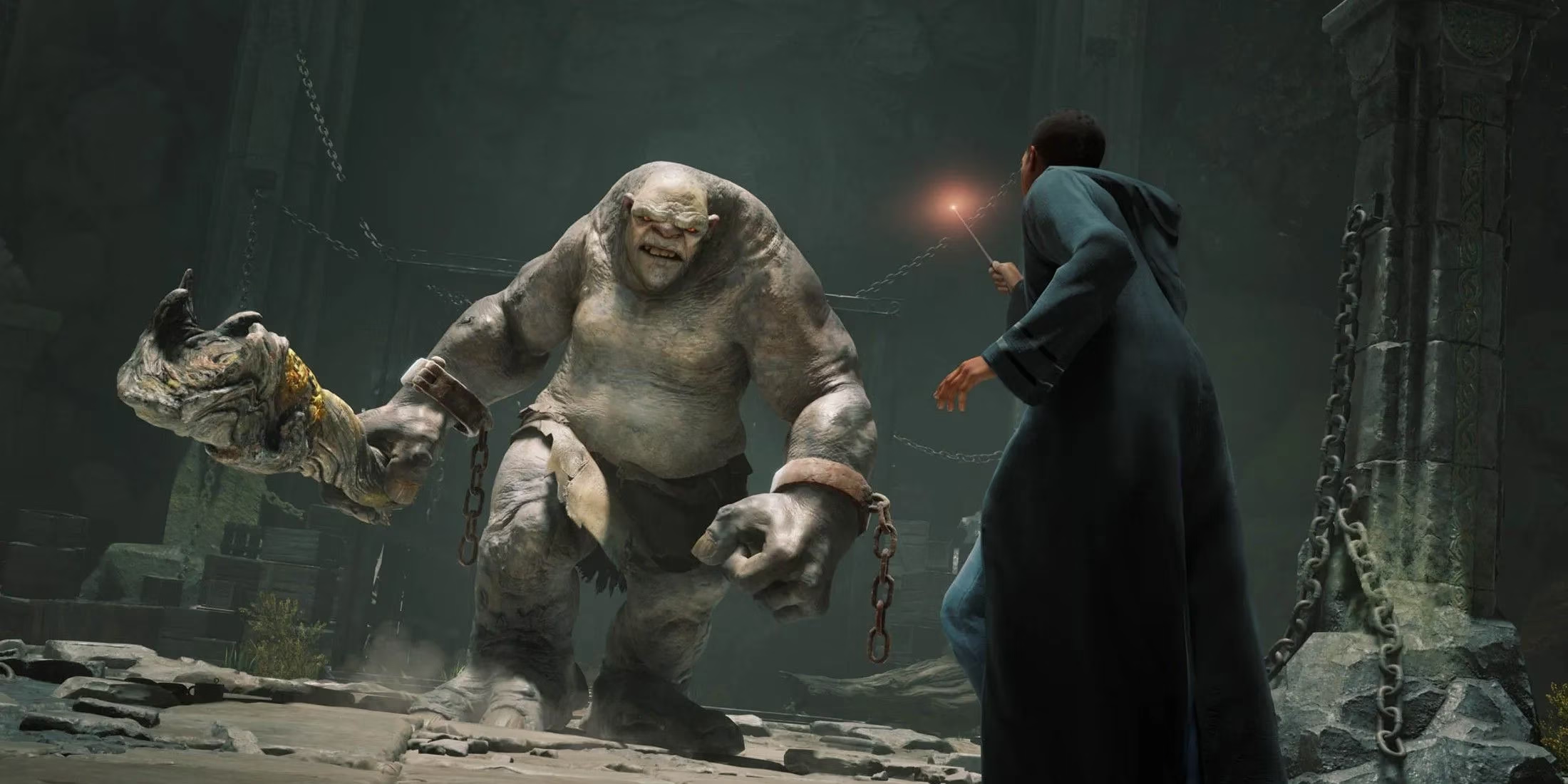
I froze, fingers hovering over the keyboard. Torture. Not disarm. Not incapacitate. The prompt sat there, glowing faintly, completely indifferent to the horror it was asking of me. I’d seen plenty of Duelling Feats over countless hours—lift a goblin into the air with Descendo, catch a troll’s thrown boulder with a well-timed Protego, even blast a poacher into a cluster of explosive barrels. Those felt sporty, almost playful. But this… this was something else entirely. The enemy I had just lit aflame was writhing on the ground, and the game was quietly inviting me to twist the Cruciatus Curse into their burning flesh.
I lowered my wand and let the flames die out. The bandit stumbled away, and I stood there in the silent forest, genuinely unsettled. How many times had this feat appeared before without me noticing? I dug through my memory: since Hogwarts Legacy launched back in February 2023—a launch that shattered records and became the year’s best-selling title—players like me had been grinding through its rich open world, collecting spells, taming beasts, and shaping our own coming-of-age stories. The game’s massive success meant that by 2026, the community had dissected nearly every hidden detail. Yet this particular Duelling Feat still managed to feel like a slap, a quiet reminder that the Wizarding World’s shadows run very deep.
The real genius of Hogwarts Legacy’s combat system has always been its freeform approach. Duelling Feats aren’t tracked in any official log; there’s no menu listing them, no achievement tied to completing them all. They materialize organically during battle, like little dares whispered by the game’s AI director. Most are innocuous—depulso an enemy into a wall, use accio to yank a weapon from a dark wizard’s hand, set three opponents on fire simultaneously. These feats keep combat fresh and reward you with extra experience, a gear drop, or a small boost to your spell cooldowns. They’re designed to make you feel clever, not cruel.
But this one? This one weaponizes the very same Dark Arts mechanics that the game dangles in front of you like forbidden fruit. Since day one, Hogwarts Legacy has allowed players to learn Unforgivable Curses without any real consequence. You can become a master of Crucio, Imperio, and Avada Kedavra while classmates and professors nod approvingly, no morality bar in sight. That absence of a moral compass has been a recurring criticism—and frankly, a missed opportunity. When I first played through the Sebastian Sallow storyline back in 2023, I was struck by how the narrative could swing from poignant to downright sociopathic depending on whether I decided to cast a torture curse during a side quest. And yet, the world never truly pushed back. The lack of repercussions made my choices feel weightless after a while.
This Duelling Feat encapsulates that bizarre disconnect. In the heat of a random skirmish, the game doesn’t treat “torturing a burning enemy” as an ethical dilemma; it presents it as any other optional challenge. There’s no mechanic to flag you as a budding Dark Lord, no whisper of concern from a companion. It’s just another tick on an invisible checklist. I’ve seen the Reddit threads, of course—posts like the one from u/Severe_Risk_6839 that went slightly viral in the community, labeling this exactly the kind of feat meant for a fully-fledged Death Eater, not a fifteen-year-old student. The comments were a mix of dark humor and genuine bewilderment. “Yeah, I’m sure Professor Weasley would be proud,” one person wrote. Another joked: “Fifth-year be like: today I’ll learn Herbology and then commit psychological warfare.”
But beyond the jokes, there’s an eerie brilliance to it. The Wizarding World has never been a purely whimsical place; JK Rowling’s books are littered with moments of genuine dread—dementors sucking out souls, the imperius curse robbing free will, children forced to carve words into their own skin. Hogwarts Legacy, despite its family-friendly rating, inherits that tradition. By slipping this feat into the random rotation, Avalanche Software planted a quiet reminder that magic isn’t always wondrous. Sometimes it’s a tool for inflicting terrible pain, and you, the player, are the one holding the wand.
I confess I’ve never completed that particular feat. Over the last three years, I’ve dabbled in the Dark Arts path a couple times, mostly to explore the alternate dialogue trees and see how unhinged the combat could get. But lighting a screaming poacher on fire just so I could twist their insides with a curse? No amount of bonus XP felt worth the sourness that pooled in my gut. And yet I know—because the community has documented it exhaustively—that completing the feat does nothing beyond what any other feat does. No secret cinematic. No hidden achievement. Just a small dopamine hit of numbers going up, and the quiet acknowledgment that you went somewhere very dark for a moment.
Three years on, I still find myself weirdly grateful for that moment of discomfort. In an age where many open-world games feel sanitized, Hogwarts Legacy’s willingness to let you be a genuine monster—and to treat that monstrosity as perfectly normal—serves a strange narrative purpose. It holds up a mirror to the player’s own curiosity. Did you instinctively avoid the prompt? Did you shrug and press the button because “it’s just a game”? Or did you, like me, stand motionless for a full minute, pondering the nature of agency? None of these responses are wrong, but they reveal something about how we engage with fantasy and power.
As 2026 draws to a close, whispers of Hogwarts Legacy 2 are growing louder. Warner Bros. still hasn’t confirmed anything officially, but job listings and industry chatter suggest Avalanche Software has been hard at work for a while on a sequel. The first game’s runaway success—selling over 22 million copies by early 2024—practically guarantees a second installment. What I hope for, more than a bigger map or Quidditch finally being playable, is a more robust morality system that actually responds to choices like this Duelling Feat. Imagine a world where your companion calls you out for excessive cruelty, or where a random torture session leads to a reputation that blocks certain questlines. The foundation is already there, hidden in plain sight among the burning fields and collapsing catacombs.
For now, that infamous Duelling Feat remains a cryptic piece of code floating in Hogwarts Legacy’s sprawling sandbox. It won’t announce itself. It won’t punish or reward your decision in any meaningful narrative way. But if you ever see it flicker onto your screen while a poacher shrieks in the torchlight, take a second. You’re not just playing a game in that moment; you’re glimpsing the darkest corner of a magical universe that has always, from its very first pages, understood that even a child’s story can hurt.