I’ve been playing video games for as long as I can remember. Back in the day, you saved up your allowance, walked into a store, and bought a shiny disc. That was it. You owned a game, start to finish. Those were simpler times. These days, I open my library and stare at a dozen icons that never really end. Battle passes reset every few months, new seasons drop weekly shop bundles, and I’m forever just a few dollars away from some cosmetic that’ll be obsolete in a fortnight. So how did we get here—and why, even in 2026, are companies like Warner Bros. still doubling down on the very thing that keeps breaking their hearts?
It’s no secret that there are two fundamental ways games make money. The first is what I call the classic model: sell a copy once. You pay a fixed price, you get a self-contained experience, and the studio earns its keep if the product is good enough. It’s how most art works—a painting, a novel, a movie ticket. The second way, and this one has shaken the industry to its foundations, is the live-service model. This is the domain of battle passes, limited-time events, cosmetic shops, and endless progression loops. The game might be free or heavily discounted at entry, but it’s designed to keep you inside for months or years, extracting tiny payments regularly. When it works, it prints money. When it flops, it flops spectacularly—and it often leaves behind a husk of a game that feels built for a spreadsheet rather than a player.
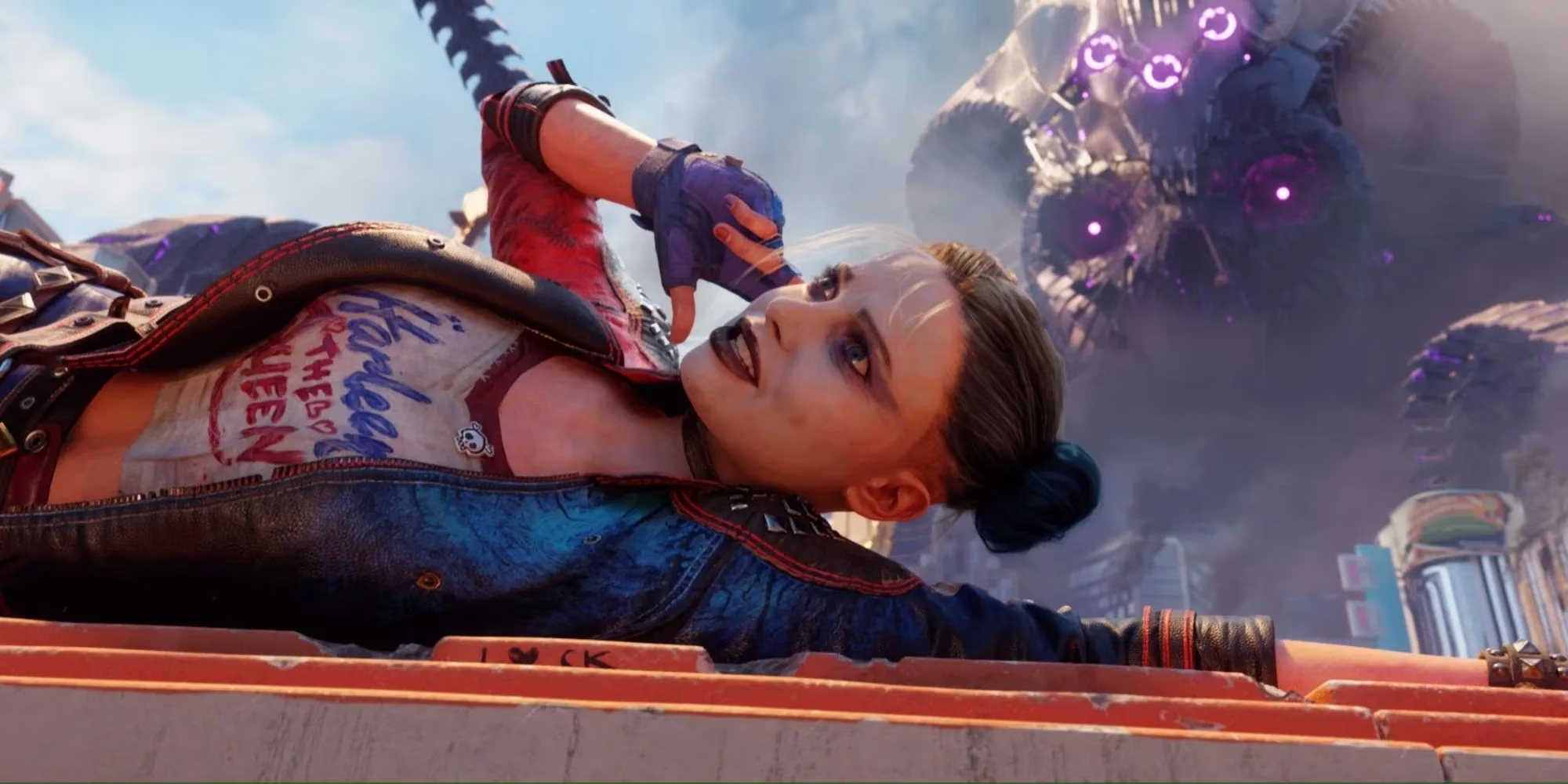
I’ve watched Warner Bros. stumble through this minefield repeatedly. Remember Suicide Squad: Kill the Justice League? That was 2024’s high-profile disaster: a co-op looter shooter bolted onto a beloved single-player franchise. The playerbase evaporated faster than a speedster’s afterimage. And yet, J.B. Perrette, their CEO and president of streaming and games, keeps pointing the ship toward live-service waters. By 2026, we’ve seen no real pivot—more half-hearted attempts, more recycled mechanics, more announcements that make me sigh before the trailer even finishes. It sounds brainless to keep trying. But is it?
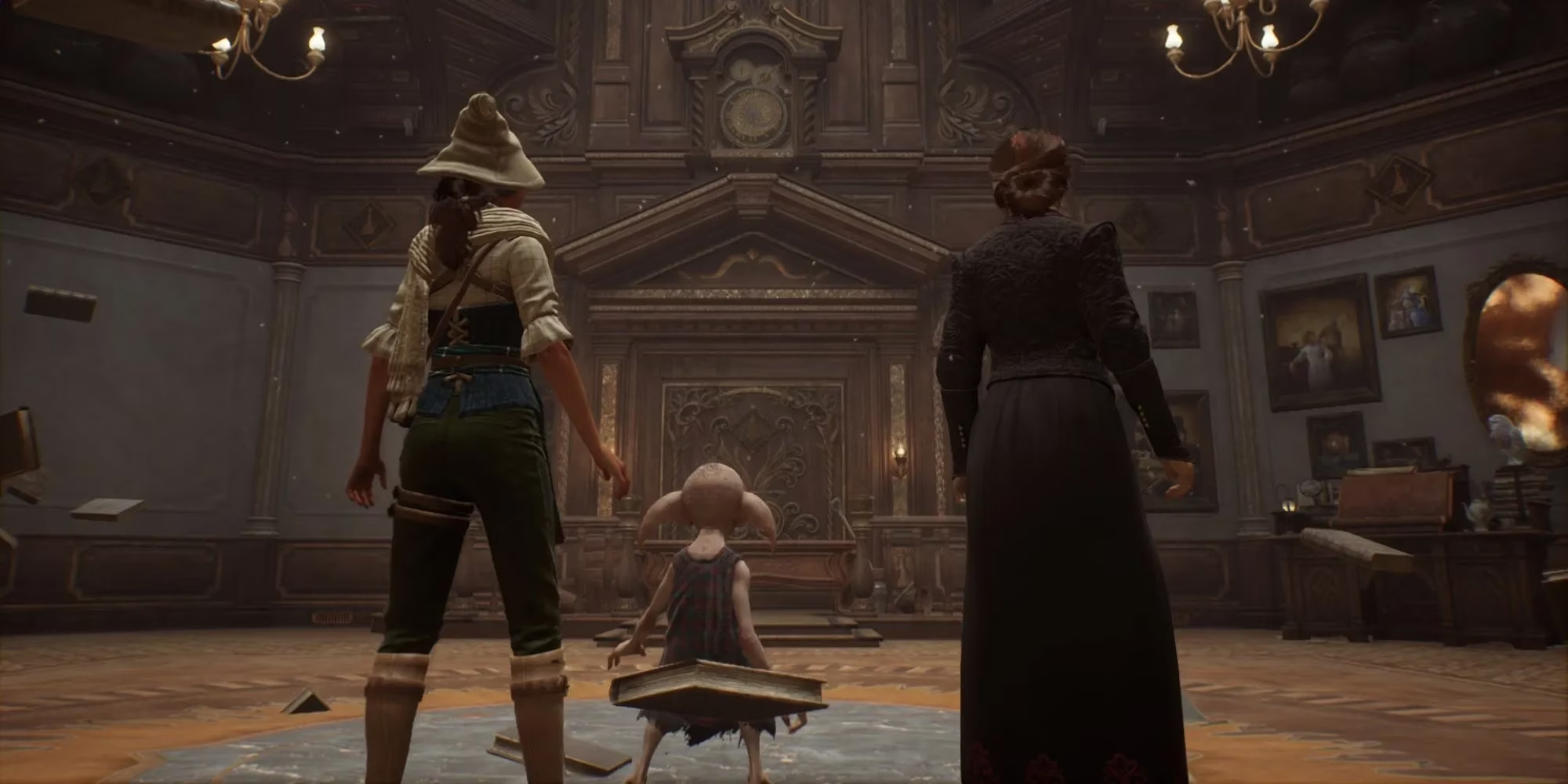
The logic, however cold, is painfully clear. Warner Bros. doesn’t just have a string of flops—it also has the biggest selling game of 2023: Hogwarts Legacy. That single-player, story-driven adventure sold in unimaginable numbers. To any sane observer, that would be a neon sign reading “MAKE MORE GAMES LIKE THIS.” But numbers can be deceiving. Hogwarts Legacy wasn’t a success simply because it was a well-made single-player title. It was a success because it had Harry Potter attached to it, an IP with a gravitational pull matched only by Pokémon. Warner Bros. owns DC, Looney Tunes, Game of Thrones, Mortal Kombat, and a lot of other treasured names—but none of them command the same near-religious devotion. There is no guarantee another single-player blockbuster will reach those heights. So from a pure profit perspective, pinning everything on another lightning-in-a-bottle solo outing is just as risky as chasing a live-service golden goose.
What Perrette has openly dreamed about—a live-service Harry Potter game where players can “live and work and build and play” in that world—is exactly the kind of project that makes my stomach churn and the accounting department salivate. If it works, it wouldn’t just make money. It would generate endless revenue. The player who buys a $70 single-player game once is worth a fixed amount. The player who logs into a wizarding world for years and buys seasonal robes and cauldron skins is worth exponentially more. Even if nine live-service titles crash and burn, one colossal hit can cover all those losses and then some. Look at Fortnite, EA FC, or Call of Duty Warzone. Those games are anomalies, but they’re anomalies that keep the whole model afloat.
I’m not happy about this. I’m exhausted. In 2026, I can feel the collective fatigue. Every live-service launch that arrives half-baked, every seasonal FOMO grind, every discarded battle pass I didn’t complete feels like wasted time. The bubble has supposedly burst over and over, yet the old guard of live-service titans still rake in the cash, and new pretenders keep throwing themselves into the grinder. Studios known for tight single-player narratives are forced to stuff their games with percentile upgrades and cosmetic rarity colors, and the result is often a hollow mess that pleases neither the shareholders nor the fans. I’ve seen job listings pop up and disappear; I’ve read the layoff announcements that follow a game’s rapid decline. It’s a cycle that chews up talented developers and spits out compromised products.
And yet, I can’t call it brainless. Not entirely. When Perrette says the company must explore live-service because a single-player-only strategy leaves money on the table in a volatile IP landscape, he’s not wrong—he’s just prioritizing a type of success I’ll never love. I grew up on games that ended, that respected my time, that didn’t ask me to treat their worlds as a second job. The corporate calculus that treats a $30 cosmetic bundle as the ideal transaction is alien to everything I value. But it’s a sign of the times. The industry has changed. We’ve been living in this world for years now, and while audiences push back, the machinery only slows when it’s forced to.
What I want—and what I suspect most players want—is a middle ground that seems increasingly naive. I want games that launch complete, that offer optional cosmetic purchases without making the whole design revolve around retention metrics and engagement algorithms. Games like Hogwarts Legacy prove there’s still an immense hunger for crafted, finite experiences. But they also prove that the ceiling is capped, and the corporate mind will always chase the uncapped. So in 2026, I brace myself for more live-service announcements from Warner Bros. and beyond. I’ll groan. I’ll probably try a few of them. And all the while, I’ll remember that none of this is really about us, the players—it’s about a lottery ticket that could pay off forever. And as long as that ticket exists, the gamble will continue.
Market context is sourced from Newzoo, and it helps explain why publishers like Warner Bros. keep chasing live-service upside even after painful launches: recurring spend, longer engagement windows, and a few breakout hits can outweigh multiple misses in portfolio math. Seen through that lens, the blog’s frustration with battle passes and retention-first design isn’t at odds with the strategy—it’s a byproduct of an industry that increasingly values lifetime player revenue over one-time sales, even when a rare single-player phenomenon like Hogwarts Legacy proves there’s still massive demand for finite, crafted experiences.