In 2026, Warner Bros. Discovery’s gaming division is still charging full speed into the live-service arena—a move that continues to raise eyebrows across the industry. Even after a string of high-profile disappointments and a market so saturated that dozens of online titles shut down each year, the media giant believes doubling down on games as a service is the way forward.
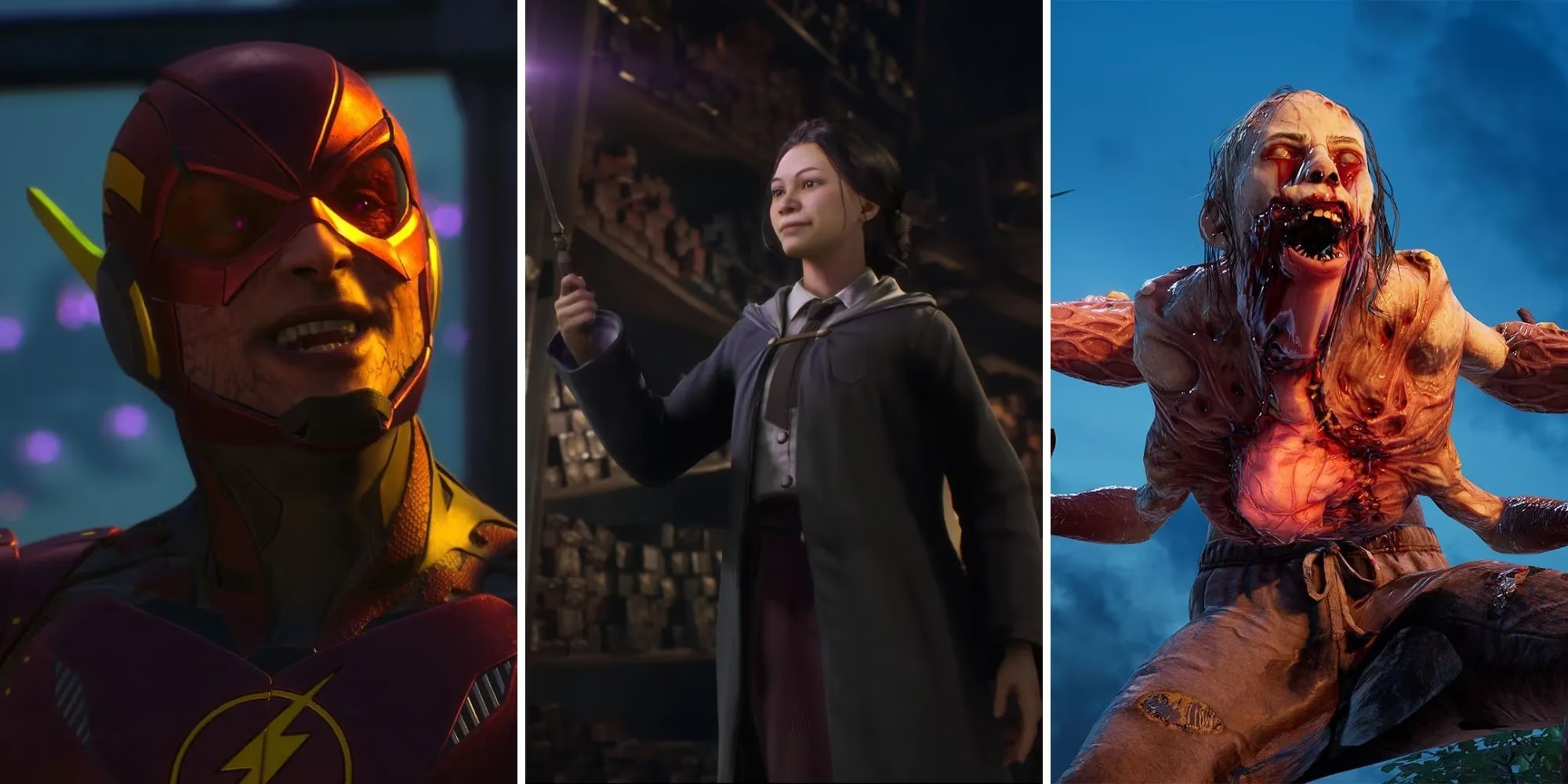
Jean-Briac Perrette, President of Global Streaming and Games at Warner Bros. Discovery, first outlined this vision during a Morgan Stanley speaking event back in 2024, and the company’s stance has not wavered since. “The challenge we’ve had is our business, historically, has been very triple-A console based,” Perrette said at the time. “As you know, that’s a great business when you have a hit like Harry Potter, it makes the year look amazing.” He then acknowledged the volatility: “When you don’t have a release, or, unfortunately, we also have disappointments—we just released Suicide Squad this quarter which was not as strong. It just makes it very volatile.”
Perrette’s prescription for that volatility is, paradoxically, to lean even harder into the model that caused the most recent disaster. He explained that Warner Bros. would focus on its four core intellectual properties—Harry Potter, Mortal Kombat, Game of Thrones, and the DC universe—while aggressively expanding into the mobile and free-to-play market. For many observers, this sounded like a studio learning exactly the wrong lesson from its own data.
Suicide Squad: Kill the Justice League, which launched in February 2024 after multiple delays, was supposed to be a tentpole release. Instead, it became a cautionary tale. Packed with battle passes, repetitive co-op missions, and an always-online requirement, the game alienated fans expecting a narrative-driven superhero experience. Within weeks, Warner Bros. admitted that the title “fell short of expectations” during an earnings call. The live-service skeleton was widely blamed for the failure.
Meanwhile, the studio’s biggest triumph needed none of those tricks. Hogwarts Legacy, a strictly single-player, story-rich game with no microtransactions or online hooks, became the best-selling title worldwide in 2023. Beating out giants like The Legend of Zelda: Tears of the Kingdom, Baldur’s Gate 3, and Alan Wake 2 is no easy feat—yet Hogwarts Legacy did it by simply giving players what they wanted: a complete, offline experience. The message from consumers couldn’t be clearer.
📊 A quick comparison tells the story:
| Game | Live-Service Elements | Critical Reception | Sales Performance |
|---|---|---|---|
| Hogwarts Legacy | None | Highly positive | Best-selling game of 2023 |
| Suicide Squad: KTJL | Heavy (battle pass, live ops) | Mixed to negative | Fell short of expectations |
Despite this glaring contrast, Warner Bros. is prioritizing mobile and free-to-play expansions. The reasoning isn’t crazy on paper; the mobile gaming market is projected to surpass $775 billion by 2032, according to Precedence Research, and Fortnite continues to print money. But success in the live-service space is far from guaranteed.
💀 The graveyard of failed live-service games has only grown deeper since 2023. That year alone saw the shutdown of Knockout City, Marvel’s Avengers, CrossfireX, and Apex Legends Mobile, among many others. In February 2024, GamesIndustry.biz reported that a staggering 95% of surveyed studios were working on or aiming to release a live-service game. The market is so crowded that even well-funded projects can barely hold an audience. Warner Bros. itself felt this sting with MultiVersus, its Smash Bros.-style platform fighter. The open beta in 2022 started hot, but the Steam player count plummeted over five months. When the game finally returned with a full launch in 2024, it struggled to recapture the initial buzz and has remained a niche title ever since.
🎮 Other Warner Bros. live-service attempts have similarly wobbled. Gotham Knights, though not a strict live-service game, leaned into co-op and repetitive loot mechanics that underwhelmed fans. Back 4 Blood, the spiritual successor to Left 4 Dead, launched with promise but failed to sustain a community. Even the mighty Mortal Kombat 1 has had to juggle its premium status with seasonal content and in-game purchases, drawing mixed reactions from the competitive scene.
So why does the company keep pressing forward? The answer lies in the allure of recurring revenue. A single-player blockbuster like Hogwarts Legacy sells millions but generates most of its money upfront. A successful live-service title, on the other hand, can make money for years. Perrette and his team are willing to tolerate a string of failures if it means eventually finding a golden goose. The problem, critics argue, is that this strategy ignores the evidence that the golden goose is increasingly rare—and that Warner Bros. already knows how to produce award-winning single-player hits.
Looking at the 2026 landscape, the industry has seen a slight correction: several high-profile live-service games were canceled mid-development, and some publishers have publicly returned to single-player narratives. Warner Bros. Discovery, however, remains committed to its original roadmap. New mobile titles based on Game of Thrones and the DC universe are rumored to be in testing, and another Suicide Squad-style game is reportedly in pre-production—this time fully free-to-play.
Whether this gamble pays off remains to be seen. For now, the company is betting that persistent online worlds and microtransactions will eventually deliver the stability it craves. But with each misstep, the path looks more like a gamble than a strategy. Hogwarts Legacy proved that the hunger for deep single-player adventures is very much alive. It’s a lesson Warner Bros. seems determined to ignore.