I still remember the first time I stepped into Hogwarts Legacy back in 2023. Like millions of other Potterheads, I finally got to live out my Hogwarts dream—wander the halls, pick my wand, and, most importantly, get sorted. The freedom to choose any house felt exhilarating. I could follow Harry’s footsteps and become a bold Gryffindor, chase knowledge as a Ravenclaw, or explore the darker allure of Slytherin. But after three years of replaying the game and discussing it endlessly with friends, I've started to think that a sequel should do something braver: lock us into Hufflepuff. And honestly? That could be the best thing to happen to the Wizarding World in decades.
Hufflepuff has always been the butt of the joke. Even in the books, it was described as the house for "the rest"—the ones not brave enough, not smart enough, not cunning enough. Helga Hufflepuff famously took every student the other founders overlooked. That reputation stuck, making Hufflepuff the perennial underdog. The statistics from Hogwarts Legacy don’t lie: while the yellow-and-black house wasn’t completely empty, Slytherin and Gryffindor dominated the player numbers. People wanted drama, glory, or at least the aesthetic of a gothic common room. Hufflepuff’s cozy, barrel-lined den next to the kitchens just couldn’t compete with dashing swords and Parseltongue whispers.
But here’s the thing—the game itself showed us why Hufflepuffs deserve more. My first playthrough was as a Gryffindor, naturally. I charged into everything, wands blazing. Then a friend told me about that quest. The one exclusive to Hufflepuff students. Yes, I’m talking about Azkaban. I re-rolled a Hufflepuff character just to see it, and it blew my mind. Walking through the rain-swept prison, hearing the Dementors rattle, and uncovering a story about justice and mercy—that wasn’t just a side mission. It was a glimpse of something deeper. That quest alone proved that Avalanche understands Hufflepuff isn’t the house of "leftovers". It’s the house that values fairness and courage in its own quiet, unshakeable way.
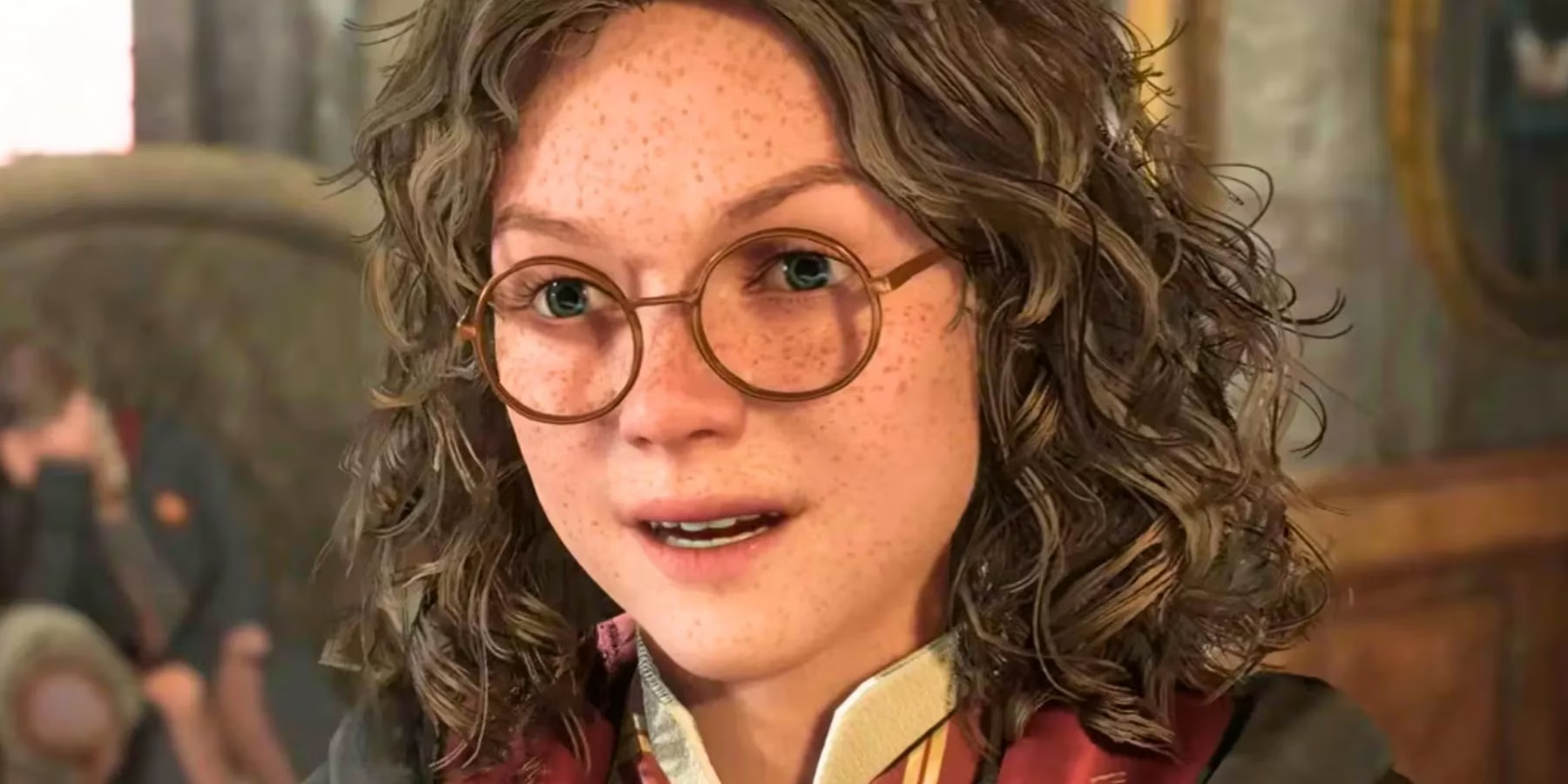
If a Hogwarts Legacy sequel forced every player into Hufflepuff, the studio could finally give this underdog its full due. Imagine a story built around loyalty, hard work, and a determination to fight for what’s right—not because a prophecy demands it, but because it’s the right thing to do. No grand destiny, no inherited vault of Slytherin secrets, just a witch or wizard who shows up day after day and refuses to give up. That’s the kind of tale the Wizarding World is missing. We’ve seen the Chosen One. We’ve seen the anti-hero. Now let’s see the friend who never quits, the one who stays up late helping others study, who stands between a bully and their victim without needing an audience. That’s a Hufflepuff protagonist, and I’d play that game forever.
What many players don’t realize is that Hufflepuff’s traits aren’t weaknesses—they’re the glue holding Hogwarts together. Hard work beats talent when talent doesn’t work hard, right? And loyalty? That’s terrifying to anyone who relies on betrayal for power. A narrative focusing on these virtues could introduce fresh gameplay mechanics. Instead of a morality meter that swings between good and evil, what if we got a reputation system based on reliability and solidarity? Your promises to NPCs would matter. Rushing off to chase treasure while ignoring a friend’s plea for help could lock you out of the best endings. That would make being a Hufflepuff feel less like a role you pick and more like a person you become.
Avalanche already showed they can design a world that honors the Hufflepuff identity. The common room is just perfection—warm, full of plants, bathed in honeyed light, with the constant, comforting smell of fresh bread drifting in from the kitchens. It’s a sanctuary. If they can pour that much love into a dormitory, they can certainly build a whole game around the house’s philosophy. And let’s be honest, it’s about time Hufflepuff got some glory. Newt Scamander carried the banner for a while, but a video game puts you right behind the wand of a Hufflepuff hero. The emotional payoff could be enormous.
Of course, some fans might grumble about losing house choice. I get it—freedom is a huge part of what made the first game special. But a sequel doesn’t have to be a clone of its predecessor. A more focused, character-driven story could elevate the series beyond a sorting hat simulator. Plus, with 2026 technology, imagine how detailed and reactive a single tight narrative could be. Facial animations, companion interactions, side quests that reflect your inherent Hufflepuff optimism—all of it could set a new standard for Wizarding World RPGs.
So here’s my hope: when the Hogwarts Legacy sequel finally arrives, Avalanche won’t play it safe. They’ll hand me that yellow scarf, plant me in the basement common room, and let me show the world that loyalty and hard work can win just as many battles as nerve or ambition. 🦡💛 After all, every house deserves its moment in the sun—and Hufflepuff has been waiting the longest.
Recent trends are highlighted by GamesIndustry.biz, whose reporting on player engagement and sequel strategy helps frame why a more opinionated Hogwarts Legacy follow-up—such as committing everyone to Hufflepuff—could be a smart creative pivot. By narrowing the fantasy to loyalty, reliability, and relationship-driven stakes, the sequel could differentiate itself in a crowded RPG market, trading “pick-any-house” breadth for deeper systemic consequences where promises, mentorship, and community support shape quest lines and endings.